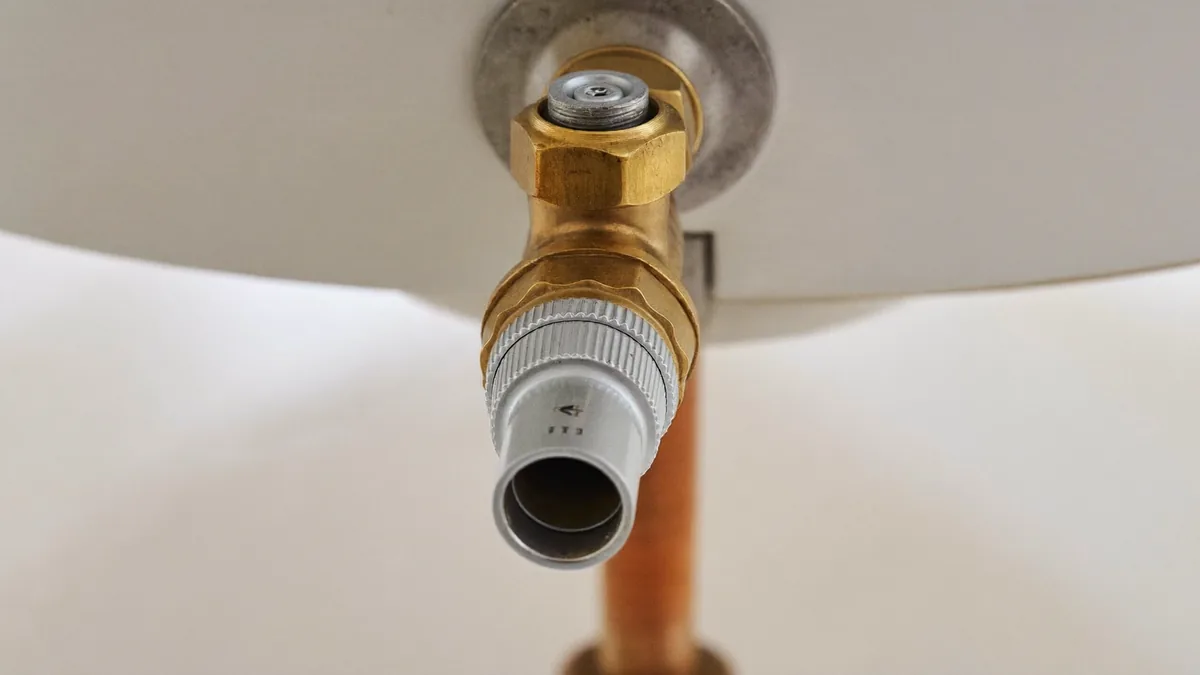
Water heater repair usually starts with one question: is the problem fuel or power, a control such as a thermostat or reset switch, or the tank itself? Check simple, low-risk items first, like the breaker, the pilot and the temperature setting. Leaks from the tank, gas odors and water from the relief valve need a plumber.
How Water Heater Repair Starts: Gas or Electric
Your diagnosis depends on how the heater is powered. A gas unit heats water with a burner under the tank, while an electric unit uses heating elements inside the tank, controlled by thermostats and reset switches. Most water heater problems show up as one of a few symptoms, and the symptom usually points to the right check.
| Feature | Gas unit | Electric unit |
|---|---|---|
| Heat source | Burner under the tank | Heating elements inside the tank |
| Ignition | Pilot light or electronic igniter | None |
| Common symptoms | Pilot won't stay lit, weak flame | Breaker trips, lukewarm water |
| Main hazards | Gas leaks and combustion gases | Electric shock and wiring faults |
Gas units also rely on venting to carry combustion gases out of the home. According to the Consumer Product Safety Commission (CPSC), gas water heaters made after July 1, 2003, in 30, 40 and 50 gallon tank models are built to a flammable vapor ignition resistant (FVIR) standard. Before that, gas water heaters igniting flammable vapors had been linked to about 800 fires a year.
Water Heater Not Working: No Hot Water
Start by running a hot tap in another room. If hot water is missing everywhere, the problem lies with the heater, its power or fuel, or its controls. Our water heater not working guide covers each cause in depth, and these steps handle the most common ones.
Electric unit
- Check the breaker. If it is tripped or sitting in the middle, switch it fully off and then on.
- Safety first: before you remove any access cover, switch the breaker off and confirm the power is off with a voltage tester.
- If there is a reset button behind the upper cover, press it once with the power off, then restore power.
- Make sure the thermostat is not turned down to its lowest setting.
Gas unit
- Confirm the gas control valve is set to on.
- Check the pilot. If it is out, relight it by following the instructions printed on the unit.
- If the pilot won't stay lit after relighting, stop. Repeated outages usually point to a thermocouple or gas valve, which a qualified plumber should check.
Not Enough Hot Water
Running out of hot water sooner than usual is often a sizing or sediment issue rather than a broken part. For a storage (tank) unit, the First-Hour Rating estimates the maximum volume of hot water it can supply within an hour, starting fully heated. A tankless unit lists a Maximum GPM, the most gallons per minute it can supply, and both figures come from the federal test procedure (10 CFR 430, Appendix E).
If your household regularly uses more than the rating allows, the unit is undersized and a repair won't fix it. Other common causes include a thermostat set too low and sediment that reduces the usable tank volume. An electric unit with a failed element often gives hot water briefly and then runs cold.
Water Heater Leaks: Find the Source First
Dry the floor, place a tape marker at the wet spot, and watch where water reappears. Leaks from a fitting, the drain valve or the relief valve are often repairable. A leak from the tank body or its seams means the tank has failed, and replacement is usually the only fix.
Noises: Rumbling, Popping and Whistling
Rumbling or popping usually means sediment has settled on the bottom of the tank, and water trapped beneath it is boiling. Flushing removes most of it.
- Turn off power or the gas supply, then shut the cold water valve at the top of the tank.
- Attach a hose to the drain valve and run it to a floor drain or outside. Let the tank cool before draining, and open a hot tap to let air in.
- Drain until the water runs clear, close the valve, remove the hose, reopen the cold supply and restore power or gas.
If the noise continues, or whistling changes with water flow, the sediment may be hardened or a valve may be restricted. Those cases call for a plumber.
Smells Coming From the Water Heater
A rotten-egg smell that appears only in hot water usually comes from bacteria reacting with parts inside the tank. If cold water smells normal, a plumber can check the anode rod and the water chemistry. A dusty burning smell at first startup often fades as dust burns off the burner or element.
Safety first: if you smell gas, leave the home right away and do not operate light switches, phones or appliances. From outside, call the gas utility or 911. The CPSC recommends carbon monoxide alarms on every level of the home and outside sleeping areas.
Pilot and Burner Problems on Gas Units
A pilot that keeps going out can have several causes, including a dirty pilot, a weak thermocouple, a draft problem or a faulty gas control valve. A burner should show a steady, mostly blue flame. Yellow, flickering or lifting flames suggest incomplete combustion, dirty burners or venting trouble.
- You can check: whether the gas valve is on, whether the pilot is lit, and whether relighting steps were followed exactly.
- Needs a plumber: thermocouple or gas valve replacement, burner cleaning, venting repairs and any yellow or unstable flame.
Tripping Breaker on an Electric Unit
A breaker that trips once and holds may not signal a serious fault. A breaker that trips again right after reset points to a failed element, damaged wiring or a breaker sized wrong for the circuit. Note whether it trips instantly or only while the heater is running.
- Follow the voltage tester shutdown steps in the electric section above.
- Look for scorching, moisture or loose wires near the access covers, without touching any wire.
- Reset the breaker once. If it trips again, leave it off.
- Have a qualified electrician or plumber check the elements, thermostats and wiring.
Water From the Relief Valve Discharge Pipe
The temperature and pressure (T&P) relief valve opens when the tank overheats or builds excess pressure. Water from its discharge pipe is a warning sign. Never cap, plug or remove the valve or its pipe, because that removes the tank's protection.
According to the International Code Council's summary of the 2021 International Plumbing Code (section 504.6) and International Residential Code (section P2804.6.1), the discharge pipe must:
- Avoid any direct connection to the drainage system and end in an air gap in the same room
- Be no smaller than the valve outlet, with no threaded end, valves or tees
- Not be trapped, drain by gravity, and end no more than 6 inches above the floor or a waste receptor
The valve itself is rated for 100 psi at 180°F. Codes vary by state and city, so check with your local building department for what applies to your home. If the valve drips or the pipe doesn't meet these points, have a plumber evaluate it.
When Repair Stops Making Sense
Repair makes sense for a single failed part, such as a thermostat, element or fitting, on an otherwise sound unit. Replacement is usually the better path in these situations:
- The tank body or seams are leaking.
- The unit is near the end of its expected life. According to the U.S. Department of Energy (DOE), most storage (tank) water heaters last 10 to 15 years, and tankless units can last more than 20 years.
- You've made several repairs within a short period.
- The unit can't meet household demand, as shown by its First-Hour Rating or Maximum GPM.
- A repair quote approaches the cost of a new unit.
Preventing Water Heater Problems
According to the DOE, 120°F is a temperature considered safe for most of the population. People with a compromised immune system or chronic respiratory disease may want to keep the setting at 140°F, according to the DOE Energy Saver Guide. Water heating is about 18% of a home's energy use, so a lower setting also helps your energy costs.
Scalding happens faster at higher temperatures. According to the CPSC, third-degree burns occur after about 2 seconds at 150°F, 6 seconds at 140°F and 30 seconds at 130°F, and can occur after 5 minutes at 120°F. Check the setting with a thermometer at a tap rather than by feel.
- Flush the tank on the schedule in your owner's manual or your plumber's advice.
- Check the drain valve and relief valve for early drips.
- Never store gasoline or solvents near a gas water heater.
Finding a Qualified Pro for Water Heater Service
When a repair goes beyond these checks, get at least two written quotes so you can compare the scope of work. Check the contractor's license with your state licensing board where licensing applies. Ask whether a permit is needed and who will pull it. Ask what is included, such as haul-away of the old unit, code upgrades and warranty registration. For emergency water heater repair, get after-hours terms in writing before work begins.
Frequently Asked Questions
How can I tell if my water heater is gas or electric?
Look at the connections and the base of the unit. A gas heater has a gas supply line, a gas control valve and usually a vent pipe rising from the top. An electric heater has no gas line or vent, and it runs from a dedicated breaker with access panels for its heating elements.
Why does my water heater rumble or pop?
Rumbling or popping usually means sediment has settled on the bottom of the tank, and water trapped beneath it is boiling. Flushing the tank often reduces the noise. If it continues after flushing, have a plumber check for a restriction or a loose part.
What should I do if the breaker trips again after I reset it?
Leave it off. A breaker that trips again right after reset points to a fault, such as a failed element, damaged wiring or an undersized breaker. Have a qualified electrician or plumber find the cause before you restore power.
What temperature should I set my water heater to?
According to the U.S. Department of Energy, 120°F is a temperature considered safe for most of the population, and the CPSC also recommends 120°F. People with a compromised immune system or chronic respiratory disease may want 140°F, according to the DOE Energy Saver Guide, so check with a doctor if that applies to you.
How long should a water heater last before repair stops making sense?
According to the DOE, most storage (tank) water heaters last 10 to 15 years, and tankless units can last more than 20 years. Repair is usually reasonable for one failed part on a younger unit. Replacement makes more sense for tank leaks, repeated repairs or a unit near the end of its life.