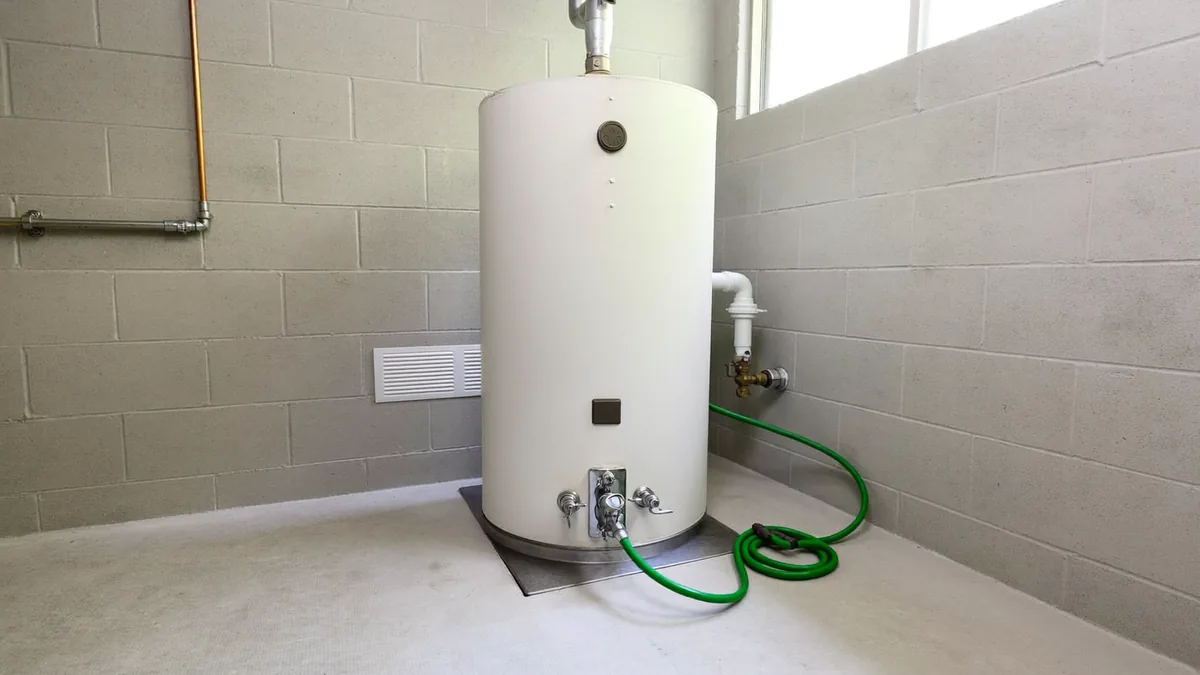
A water heater leaking from the bottom is usually caused by a loose or failing drain valve, water discharged from the temperature and pressure relief valve, condensation on a gas unit, or corrosion inside the tank. Drips from a fitting or valve are often fixable, but water seeping from the tank body itself means the tank has failed and cannot be repaired.
What Causes a Water Heater Leaking From the Bottom?
Water at the base of a tank can come from four places. The spots look alike at first, but the source decides whether the fix is a few minutes with a wrench or a new water heater. Find where the water starts, not just where it pools on the floor.
- Drain valve: the small valve near the bottom used to flush sediment. Its washer, seat or plastic body can wear out or crack.
- T&P discharge pipe: the pipe that carries water away from the temperature and pressure relief valve. Water coming out of this pipe means the relief valve has opened or is dripping.
- Condensation: moisture that forms on the outside of a cold tank or on the vent area of a gas unit. It can look like a leak, but it does not come from inside the tank.
- Tank corrosion: rust and wear that eventually work through the steel shell or the seams near the bottom.
Safety First
Hot water can cause serious burns, so set the thermostat to 120°F. According to the CPSC, third-degree burns can occur after about 2 seconds at 150°F, 6 seconds at 140°F, 30 seconds at 130°F, and after about 5 minutes at 120°F. Before touching wiring or an electric element, turn off the breaker and verify with a voltage tester that the power is off. If you smell gas, leave the home and call the gas utility or 911 from outside.
How to Tell the Sources Apart
Start with a simple test that takes about an hour. You want to know whether the water is coming from the drain valve, the relief valve pipe, the outside of the tank, or the tank itself.
- Dry the bottom of the tank, the drain valve, and the T&P discharge pipe with a towel.
- Set a dry paper towel or piece of cardboard under the drain valve and the T&P pipe outlet.
- Run a hot water tap elsewhere in the home for several minutes so the heater cycles on.
- Check the towels and the tank surface at intervals, and note which spot gets wet first.
- If the drain valve spot is wet, the problem is the drain valve. If the T&P pipe is wet, see the relief valve section below.
- If the tank is wet on top or sides but the wet area dries when you wipe it and stays dry when the heater is off, the cause is likely condensation.
- If water comes from a seam or the tank body and keeps coming back, suspect tank corrosion.
Drain Valve Leaks: Tighten, Clean or Replace
A drain valve often leaks because sediment sits in the seat, the cap is loose, or the plastic body has cracked. Many drips stop after the valve is fully closed and the cap is snug. Overtightening a plastic valve can crack it, so turn it gently.
- Shut off power or gas to the heater, following the safety note above.
- Close the cold water supply valve that feeds the tank.
- Open a hot tap somewhere in the home to let air into the tank.
- Attach a garden hose to the drain valve and run it to a floor drain or outside, where the water can drain safely.
- Open the drain valve briefly to flush sediment, then close it fully.
- Watch the valve for a drip. If it still leaks, remove the cap and check for debris or a worn washer.
- If the valve body is cracked or the seat is damaged, replace the valve with one of the same thread size. Replacement is a common job, but check with your local building department whether a permit is needed.
T&P Discharge Pipe Leaks
The temperature and pressure relief valve opens when the water gets too hot or the pressure inside the tank climbs too high. Water in the discharge pipe means the valve has released, or it is dripping because of a fault. Do not cap, plug or remove the valve or its pipe to stop the drip.
Several things can cause the release. The water temperature may be set too high, pressure may be building in a closed plumbing system as water heats and expands, or the valve itself may be failing. A plumbing professional can check pressure and temperature and tell you whether an expansion tank or a pressure-reducing valve is part of the problem.
What a Compliant Discharge Pipe Looks Like
According to the International Code Council, the 2021 editions of the International Plumbing Code (section 504.6) and the International Residential Code (section P2804.6.1) set these rules for the discharge pipe:
- It must not connect directly to the drainage system.
- It ends in an air gap in the same room as the water heater.
- It is not smaller than the valve outlet and is not trapped.
- It drains by gravity and ends no more than 6 inches above the floor or a waste receptor.
- It has no threaded end, and no valves or tees.
- The valve is rated for 100 psi at 180°F.
Local codes adopt these rules with their own changes, so check with your local building department before altering the pipe.
- Check whether the water is dripping steadily or only after the heater runs.
- Look at the pipe end. Make sure it is not capped, threaded, or fitted with a valve.
- Check that the pipe ends in the same room, drops with a downward slope, and sits no more than 6 inches above the floor or a drain.
- Confirm the temperature setting is 120°F.
- If the pipe has been dripping for a while, have a professional check the valve and pressure before you lift the test lever. The water released can be hot, so stand to the side.
- If the valve keeps dripping after the temperature and pressure are checked, the valve likely needs replacement.
Condensation on Gas Water Heaters
Gas burners produce water vapor that leaves through the vent. When a cold tank or cold inlet water meets warm air, moisture can form on the outside of the tank and drip to the floor. This is most noticeable in cool basements, during the first heating cycle, or after a long period without hot water use.
Condensation usually shows these signs: the moisture appears on the top or sides of the tank, it dries when you wipe it, and it shows up again when the heater runs. A true leak keeps coming from one spot and does not dry, even when the heater is off. Mark the edge of any wet area with tape and check it again after a few hours. If water appears near the vent or the draft hood area, call a professional to check venting, because that can signal a combustion problem rather than normal condensation.
What a Drain Pan Does
A drain pan is a shallow pan placed under the tank to catch small drips. Many installations route a small drain line from the pan to a floor drain or outside. The pan protects flooring and gives you early warning of a leak, but it is not a repair. If the pan fills, the leak is coming from the tank, a fitting, or a valve above it.
- Check that the pan drain line is open and not clogged.
- Look for rust in the pan. A rusted pan can leak too.
- Ask your local building department whether a pan is required for your location, especially for installations on upper floors.
Why a Leaking Tank Cannot Be Repaired
Inside a storage tank, the steel wears from the inside. Sediment settling at the bottom can speed this up, and heat and water chemistry gradually thin the metal. When water seeps from a seam or the tank body, the steel has failed.
Patch kits, epoxy and sealants may slow a leak for a short time, but they cannot hold a pressurized, heated steel shell over time. The DOE notes that most storage water heaters last 10 to 15 years. If the tank is near the end of that range and leaks from the body, replacement is the realistic fix. Rust-colored water and rust stains around the bottom seam are common warning signs.
Preventing Bottom Leaks
Most bottom leaks start small and grow over time. Routine maintenance catches many of them early.
- Flush the tank once a year, or as the owner's manual recommends, to remove sediment.
- Close the drain valve fully after every flush, and keep the cap snug without overtightening.
- Keep the temperature set at 120°F. The DOE describes this as a temperature considered safe for most of the population, and it also lowers the pressure stress from overheating.
- Check the T&P discharge pipe every few months to make sure it is clear, unthreaded, and ends in the right place.
- Keep the area around a gas unit free of stored items. Units made after July 1, 2003, are built to a flammable vapor ignition resistant (FVIR) standard, according to the CPSC. The CPSC linked gas water heaters igniting flammable vapors to about 800 fires a year before that standard. Never store gasoline or solvents near a gas water heater.
When to Call a Professional
Call a licensed plumber if the T&P valve keeps dripping after you check the temperature and pressure, if the tank body or seams leak, if you cannot safely shut off power or gas, or if the drain valve needs replacing and you are not comfortable working on the water connections. Check the contractor's license with your state licensing board where licensing applies. Get at least two written quotes, ask who pulls the permits, and ask what is included, such as haul-away of the old unit, code upgrades, and warranty registration.
Frequently Asked Questions
Can I fix a water heater leaking from the bottom myself?
Some bottom leaks are simple to fix. A drain valve can often be flushed, closed fully, or replaced by a homeowner who is comfortable with basic plumbing and has shut off the power or gas first. Leaks from the tank body, seams, or a T&P valve that keeps dripping usually need a professional. If you are unsure which category your leak falls into, have a professional look at it before you start.
Is water coming from the T&P pipe an emergency?
Water from the T&P pipe is a sign that the relief valve has opened, which means temperature or pressure has gone too high. Do not cap the pipe. Check the temperature setting, make sure the pipe is open and drains properly, and call a professional if the drip continues. A steady discharge that does not stop should be checked promptly, because it can mean the heater is not controlling pressure correctly.
How do I know if it is condensation or a real leak?
Dry the area with a towel and tape a mark on the edge of any wet spot. Run a hot tap and check again after a few hours. Condensation dries when wiped and often appears only during heating or on cool days. A real leak keeps coming from one point, stays wet, or grows over time. Water near the vent area of a gas unit should be checked by a professional.
Can a leaking water heater tank be sealed?
Sealants and patch products may slow a leak briefly, but they do not fix a tank that has corroded through. Water heater tanks operate under pressure and heat, and the steel shell can fail again at the same spot. If water seeps from the tank body or a seam, the practical fix is replacement. Keep the old unit's make and age in mind when you compare options with a professional.
Should I replace the drain valve or the whole water heater?
Replace the drain valve if it is cracked, has a damaged seat, or still drips after it has been flushed and closed fully. Replace the whole water heater if the tank itself leaks, shows heavy rust at the seams, or is near the end of the typical 10 to 15 year range the DOE describes for storage tanks. Get two written quotes and ask what the price includes before you decide.
What should I ask a plumber before a bottom leak repair?
Ask which part they think is leaking and how they confirmed it. Ask whether the job needs a permit, who pulls it, and whether your local building department requires any code upgrades, such as a compliant T&P discharge pipe or a drain pan. Ask what is included, including haul-away of the old unit and warranty registration, so you can compare written quotes on the same basis.