If hot water runs out fast, the most common causes are a tank too small for your household's peak use, sediment buildup that cuts heating capacity, a failing lower heating element, a broken dip tube, a thermostat set too low, or a mixing valve out of adjustment. Many of these you can check yourself, starting with the thermostat.
Why hot water runs out fast: tank size and recovery
A storage tank holds a fixed amount of hot water and reheats it at a limited rate. When your household draws more hot water in a short window than the tank can supply, the water turns lukewarm and then runs cold. The federal test procedure gives a useful yardstick. The First-Hour Rating is an estimate of the maximum volume of hot water a storage water heater can supply within an hour, starting from fully heated.
Compare that rating with your busiest hour, such as weekday mornings when two showers, a dishwasher and a laundry load overlap. The sizing guide on this site walks through that comparison, and the sizing calculator on this site lets you enter your fixtures and habits. If your peak hour regularly exceeds the rating, the tank is undersized for how you use hot water, and no single repair will fully solve that.
Check for simultaneous use first
Often the tank is fine and the schedule is the problem. Two showers that start within minutes of each other can drain a tank that would handle either shower alone. Staggering showers or running the dishwasher after the last shower may solve the problem with no parts at all.
Sediment buildup that cuts heating capacity
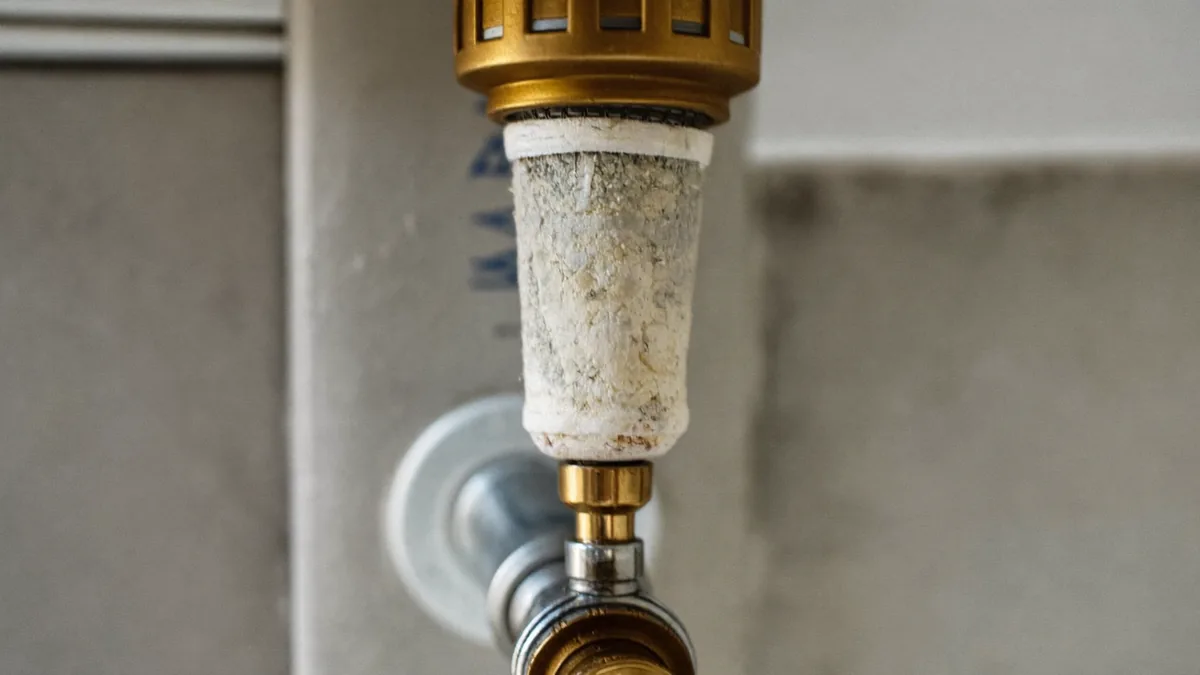
Minerals from hard water settle on the tank bottom as scale and sludge. This layer insulates the water from the burner or lower element, so the heater runs longer to reach temperature and the usable hot water shrinks. Popping or rumbling sounds from the tank often mean water is boiling under the sediment layer.
Sediment is common, and flushing the tank is often the least expensive fix to try. A flush only helps, though, if the tank is not badly scaled or corroded. An old tank with heavy buildup may have lost much of its capacity for good. Rusty or gritty water from hot taps is a sign to look more closely at the tank's condition.
Failed lower element or burner problems
Electric tanks usually have two heating elements, an upper and a lower. The upper element heats first, and the lower element heats the bottom of the tank. A failed lower element often shows up as hot water that runs out after a short shower while the top of the tank still feels warm.
Gas tanks have a burner and a control system. A weak, clogged or dirty burner can produce the same symptom, with the heater running but not heating the full tank. Element and burner repairs are best left to a qualified technician, because they involve live power or gas connections.
Broken dip tube and lukewarm water from the start
The dip tube is a plastic pipe that carries cold water down to the bottom of the tank, where it can be heated. If the tube cracks or breaks off, incoming cold water mixes directly with the hot water at the top. The outlet then delivers lukewarm water quickly, even though plenty of hot water may remain lower in the tank.
Look for a pattern. Hot water that starts normally and turns lukewarm within a few minutes, even with a correct thermostat setting and a tank of adequate size, points toward the dip tube. A sudden change after a sediment flush or after work on the water line is another clue. Confirming a broken dip tube means inspecting the inside of the tank, which is a job for a plumber.
Thermostat setting and water heater not heating enough
A thermostat set too low is the easiest cause to fix, and it is often overlooked. If your water heater is not heating enough, check the setting before anything else. On gas tanks the dial sits on the control valve, and on electric tanks it sits behind an access panel.
According to the U.S. Department of Energy, 120°F is a temperature considered safe for most of the population. According to the Consumer Product Safety Commission, third-degree burns can occur after about 2 seconds at 150°F, 6 seconds at 140°F, 30 seconds at 130°F, and can occur after 5 minutes at 120°F. The DOE also notes that people with a compromised immune system or chronic respiratory disease may want to keep the setting at 140°F, which makes a mixing valve at the fixtures more important.
Mixing valve issues that make water feel weak
Some homes have a mixing or tempering valve, either at the tank outlet or at a shower, that blends hot water with cold to a safe temperature. If that valve is set too cold, sticks, or lets cold water in when it should not, the blended water feels lukewarm even though the tank is hot. The heater itself may be working correctly.
To tell the difference, compare the temperature at a hot-only faucet with the temperature at the shower. If the hot-only faucet runs hot and the shower runs lukewarm, the mixing valve is the likely cause. Adjusting or replacing that valve should be done by a qualified plumber who can confirm the setting.
Tankless flow limits and the Maximum GPM rating
A tankless unit does not run out of hot water the way a tank does, because it heats water as it flows. It does have a ceiling. Its Maximum GPM rating, defined in the federal test procedure as the maximum gallons per minute of hot water the unit can supply, has to cover every fixture that runs at the same time.
According to the U.S. Department of Energy, federal maximum flow rates for showerheads are 2.5 gallons per minute at 80 psi, and for lavatory and kitchen faucets they are 2.2 gallons per minute at 60 psi. Two showers and a kitchen faucet running together can add up to more flow than a small unit is rated to heat. When that happens, the water temperature drops or the flow feels weak. Cold incoming water in winter also reduces how much the unit can heat.
Safety first before you check anything
Safety first: turn off power at the breaker and verify it is off with a tester before you open any electric tank cover. If you smell gas, leave the home and call the gas utility or 911 from outside. Never store gasoline or solvents near a gas water heater. The Consumer Product Safety Commission recommends carbon monoxide alarms on every level of the home and outside sleeping areas. Hot water can scald, so let the tank cool before draining it, and never cap or plug a temperature and pressure relief valve.
Step-by-step checks you can do safely
- Record the pattern. Note whether the water is lukewarm from the start or only after a few minutes, and whether the problem happens at peak hours or all day.
- Check the thermostat. Confirm the setting is close to 120°F, the level the U.S. Department of Energy describes as safe for most of the population. Make small changes and wait a few hours before judging the result.
- Test staggered use. For a day or two, avoid starting two showers or a shower and a dishwasher at the same time. If the problem disappears, the tank may be adequate for your household but too small for your peak hour.
- Compare hot-only and mixed water. Check a hot-only faucet and a shower at the same time. A large gap suggests a mixing valve problem, while a weak hot-only faucet points back to the heater.
- Look for sediment. Listen for popping or rumbling during heating. If the drain valve at the bottom is safe to use, run a small amount of water into a bucket and look for grit or rust color.
- Check the tank's age. According to the U.S. Department of Energy, most storage tank water heaters last 10 to 15 years, while tankless water heaters can last more than 20 years. An older tank with other symptoms may be near the end of its life.
- Count fixtures on a tankless unit. List every fixture that can run at once and compare the combined flow with the unit's Maximum GPM rating.
When to call a professional
Call a qualified plumber or technician when the problem points to a broken dip tube, a failed element or burner, a faulty mixing valve, or a tank that is leaking or corroded. Also call when the temperature and pressure relief valve is dripping, because that valve is a safety device and should not be ignored. A dripping valve can also mean the tank needs professional evaluation.
If the tank is undersized or near the end of its typical life, a replacement may make more sense than repairs. The sizing guide and calculator on this site can help you estimate what size fits your household before you request quotes. When you compare bids, ask for at least two written quotes, check the contractor's license with the state licensing board where licensing applies, and ask who pulls the permits. Also ask what is included, such as haul-away, code upgrades and warranty registration. Check with your local building department for permit rules where you live, because requirements vary by state and city.
Preventing hot water shortages over time
Most of the fixes above also prevent repeat problems. Keep the thermostat at a steady, safe setting, and spread out peak hot water use when you can. Schedule sediment flushes based on how hard your water is and how the tank performs, and watch for changes in how quickly the water heats.
When you shop for a replacement, the Uniform Energy Factor (UEF) is the federal measure of a water heater's overall efficiency, which helps you compare energy use. For matching capacity to your home, the First-Hour Rating for tank units and the Maximum GPM rating for tankless units matter more. Use those two figures alongside your own peak-hour and fixture count.
Frequently asked questions
Why does my water heater run out of hot water so quickly during showers?
Usually it is a combination of a tank sized below your peak hour and several fixtures running at once. Stagger showers and the dishwasher for a day or two to see whether the problem goes away. If it does, the tank may be fine and your schedule is the main issue. If lukewarm water persists with staggered use, check the thermostat, sediment and the dip tube next, and compare your peak hour with the First-Hour Rating using the sizing guide on this site.
Can a sediment flush restore hot water capacity?
Sometimes. Flushing removes loose sediment that insulates the water from the heat source, which can restore some capacity in a tank that is otherwise sound. It will not fix heavy scale, a failed element, a broken dip tube or corrosion. If hot water stays weak after a flush, the cause is likely elsewhere, and the tank's age and condition will help you decide between repair and replacement.
How do I know if the dip tube is broken?
A broken dip tube usually shows up as hot water that starts normally and turns lukewarm within a few minutes, even when the thermostat is correct and the tank is adequately sized. A sudden change after a sediment flush or after work on the water line is another clue. Confirming it means inspecting the inside of the tank, which is a job for a qualified plumber rather than a homeowner check.
Is 120°F too low for my hot water?
For most households, 120°F is the setting the U.S. Department of Energy describes as considered safe for most of the population. If the water feels too cool, first confirm the dial and whether a mixing valve is blending in cold water. Raising the setting increases scald risk. The DOE notes that people with a compromised immune system or chronic respiratory disease may want 140°F, and in that case a mixing valve at the fixtures matters.
Will a tankless water heater run out of hot water?
A tankless unit does not run out the way a tank does, because it heats water as it flows. It does have a limit, its Maximum GPM rating. If several fixtures run at once and their combined flow exceeds that rating, the temperature or flow can drop. Compare your typical simultaneous use with the rating before choosing a unit, and use the sizing calculator on this site to organize your numbers.