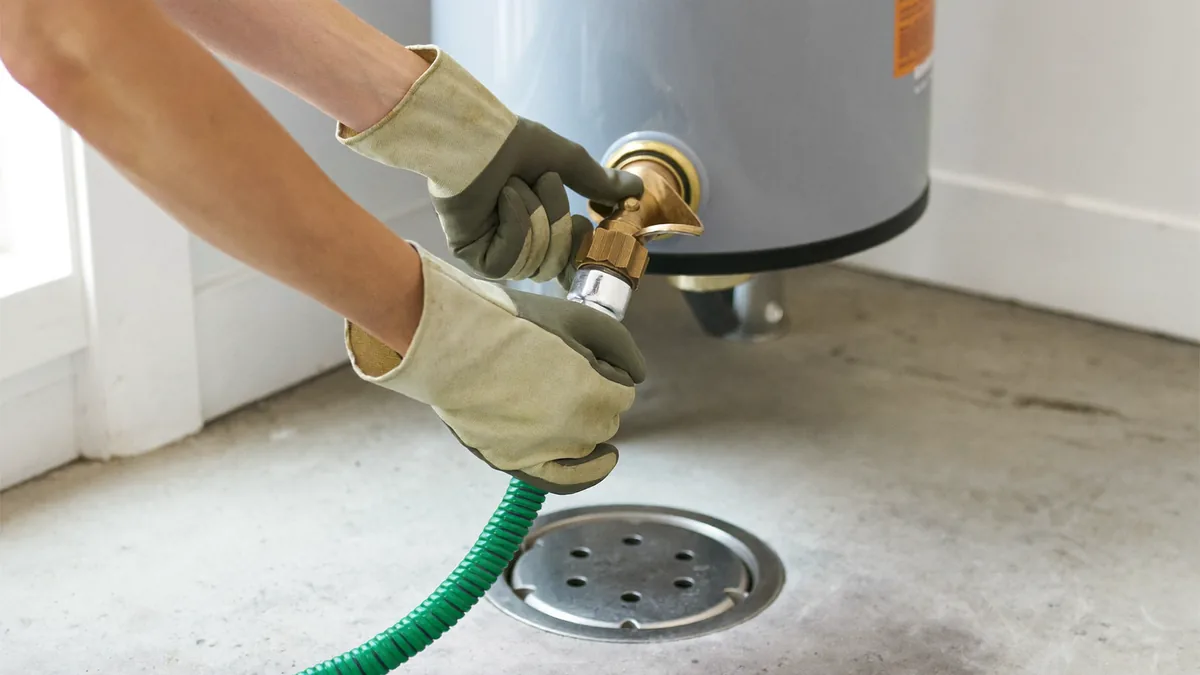
If you have no hot water, check whether one fixture or every fixture is affected. A problem at every tap points to the water heater, such as a tripped breaker, a gas or pilot issue, or an error code on a tankless unit. Work through the steps, and call a pro if they do not restore hot water.
Check whether one fixture or the whole house has no hot water
Start at the tap where you noticed the problem, then try a fixture on another floor or in another part of the home. If only one sink or shower is cold, the cause is almost always at that fixture or its supply line. If every hot tap is cold or lukewarm, the water heater or its power or gas supply is the likely source.
Flow matters too. According to the U.S. Department of Energy, the federal maximum flow rate for showerheads is 2.5 gallons per minute (GPM) at 80 psi, and for lavatory and kitchen faucets it is 2.2 GPM at 60 psi (10 CFR 430.32). Those are ceilings, so a fixture that trickles far below what it used to deliver usually has a clogged aerator or screen.
For a single fixture, work in this order:
- Check that the shutoff valve under the sink, or behind the shower wall, is fully open.
- Unscrew the aerator at the faucet tip and rinse out grit. Hot and cold water both pass through it.
- Run the hot tap for a few minutes. Sediment in the supply line can clear, and brown or rusty water at first is normal after a disturbance.
- If only the shower is cold, check the mixing valve setting and look for a worn cartridge if the handle feels loose or the temperature will not hold.
When the whole house is affected, a water heater not heating at all is usually a power, gas or control problem. Identify whether your heater is gas, electric or tankless, then follow the matching section below.
Safety first
Safety first: If you smell gas near the water heater, leave the home and call the gas utility or 911 from outside. Before you open any electric heater panel, turn off its breaker and use a voltage tester to confirm the power is off.
Gas water heater: pilot, gas supply and burner
A gas unit heats water with a burner that a pilot flame or electronic ignition lights. When the pilot is out or the gas valve is closed, the tank cools and no hot water comes out. Start with the simple checks before you go near the burner area.
- Confirm the thermostat dial is set to a heating position, not pilot or off.
- Look through the sight glass or viewing window. If the pilot is out, relight it using the instructions printed on the unit's label.
- Check that the gas supply valve on the pipe near the heater is open, with the handle in line with the pipe.
- If the pilot goes out within seconds of releasing the knob, or it will not light at all, the thermocouple or gas control may have failed. Stop here.
- Look at the area around the heater for soot, rust or debris. Do not place anything inside the burner area.
The Consumer Product Safety Commission (CPSC) says gas water heaters made after July 1, 2003, in the 30, 40 and 50 gallon tank sizes are built to a flammable vapor ignition resistant (FVIR) standard. Gas water heaters igniting flammable vapors had been linked to about 800 fires a year. Never store gasoline or solvents near a gas water heater, whatever its age.
Electric water heater: breaker, high-limit reset and elements
An electric tank has two heating elements, each with its own thermostat, plus a high-limit safety switch that cuts power if the water overheats. A tripped breaker or a tripped high-limit switch can leave the tank cold even when the heater itself is sound.
- Find the water heater breaker in the main panel. If it sits between positions or is off, switch it fully off, then back on once.
- If the breaker trips again right away, stop. A short or a failed element is a likely cause, and repeated resets can hide the fault.
- With the breaker off and verified, remove the access panel cover. The high-limit reset button is usually behind a small cover on the access panel, so note its location before you press anything.
- If the high-limit switch has tripped, press its reset button once. If it trips again, stop, because the element or thermostat needs testing.
- Check that the upper and lower thermostat settings match the temperature you want. The DOE recommends 120°F for most households.
Testing an element means checking it with a meter for continuity, which is a job to leave to a qualified pro unless you are comfortable with the tools and the procedure.
Tankless water heater: error codes, flow rate and scale
A tankless unit heats water only when a fixture opens, so most failures show up as an error code, a sudden shutdown or weak output. Its Maximum GPM is the most gallons per minute of hot water it can supply. If several taps run at once, you may be asking for more flow than the unit can deliver.
- Write down the error code on the display and look it up in the owner's manual or on the label of the unit.
- Confirm the gas supply valve is open or the electric power is on, and that a breaker has not tripped.
- Open one hot tap and see whether the unit fires. If it fires only some of the time, check the inlet screen for debris and clean it as the manual describes.
- Look for scale. Mineral buildup reduces flow and can trigger errors. Flush the unit with descaling solution following the manual's steps.
- If the code returns after cleaning and flushing, stop. A repeating code usually means a component has failed.
According to the DOE, tankless water heaters can last more than 20 years. Regular flushing helps the unit keep its rated flow over that life.
Check the temperature setting before you assume the heater failed
A dial turned down low can make a heater look dead when the water is only warm. The DOE says to set the water heater to 120°F, a temperature considered safe for most of the population. The DOE also notes that people with a compromised immune system or chronic respiratory disease may want to keep it at 140°F.
The CPSC says third-degree burns can occur after about 2 seconds at 150°F, 6 seconds at 140°F and 30 seconds at 130°F. They can also occur after 5 minutes at 120°F. A higher setting raises the scald risk at every tap, so adjust the temperature with that in mind.
When to stop and call a professional
Some findings mean the repair belongs with a qualified pro. Stop and bring in help if you see any of these:
- Water leaking from the tank, the fittings or the base of the unit.
- A breaker or high-limit switch that trips again after one reset.
- A pilot that will not stay lit, or gas controls that appear faulty.
- A temperature and pressure relief valve that drips or discharges steadily.
- A tankless error code that returns after cleaning, or a unit that shuts off during normal use.
- A tank approaching the end of its typical life. According to the DOE, most storage tank water heaters last 10 to 15 years.
Prevent the next outage
Set the thermostat to 120°F, check the setting after anyone adjusts it, and keep the area around the heater clear. Flushing sediment from a tank helps it heat efficiently, and tankless units need the periodic descaling described above.
Look at the temperature and pressure relief valve and its discharge pipe. Under the International Plumbing Code 504.6 and International Residential Code P2804.6.1 (2021 editions, as summarized by the International Code Council), the discharge pipe must meet these rules:
- It cannot connect directly to the drainage system.
- It ends in an air gap in the same room and is not smaller than the valve outlet.
- It is not trapped and drains by gravity.
- It ends no more than 6 inches above the floor or a waste receptor.
- It has no threaded end, and no valves or tees.
The valve is rated for 100 psi at 180°F. A temperature and pressure relief valve must never be capped or plugged. Local rules vary, so check with your local building department before changing any piping.
If your home has a gas water heater, the CPSC recommends carbon monoxide alarms on every level of the home and outside sleeping areas.
Getting a fair quote for water heater repair or replacement
When a repair is beyond the checklist, get at least two written quotes so you can compare the work and the price. Check the contractor's license with the state licensing board wherever licensing applies. Ask whether the quote includes permits and who pulls them, since permit requirements are set locally.
Also ask what is included: haul-away of the old unit, any code upgrades the new install triggers, and warranty registration for the new heater.
Frequently asked questions
Why does only one faucet have no hot water?
When one tap is cold while others run hot, the problem is usually local. Check the shutoff valve under that sink, then clean the aerator. If the valve is open and the aerator is clear, look at the supply line for a kink or partial blockage. A worn cartridge in a shower or tub mixing valve can also cut hot water at just that outlet. If other hot taps work, you do not need to touch the water heater yet.
What temperature should I set my water heater to?
According to the U.S. Department of Energy, you should set the water heater to 120°F, a temperature considered safe for most of the population. People with a compromised immune system or chronic respiratory disease may want to keep it at 140°F. The CPSC notes that a third-degree burn can occur after about 6 seconds at 140°F, and after about 5 minutes at 120°F, so take care at every tap.
Can a tripped breaker cause no hot water in an electric heater?
Yes. An electric water heater runs on its own breaker in the main panel, and a tripped breaker cuts power to both heating elements. Reset it once with the breaker fully off and then on. If it trips again right away, stop, because a short or failed element may be the cause. A tripped high-limit switch can also leave the tank cold, and repeated resets there need a pro's diagnosis.
How long should a water heater last?
According to the U.S. Department of Energy, most storage tank water heaters last 10 to 15 years, while tankless water heaters can last more than 20 years. Age alone does not mean the heater is failing. A tank near the end of that range that shows leaks or repeated outages is a good candidate for replacement planning. The manufacture date on the label tells you its age.
What does a tankless water heater error code mean?
Error codes differ by manufacturer, so the owner's manual or the label on the unit is the most reliable guide. Codes often point to a flow problem, a sensor fault, a gas or power issue, or scale buildup. Write the code down, clean the inlet screen and complete the flushing the manual describes. If the code returns after that, stop and have a qualified pro diagnose the fault.