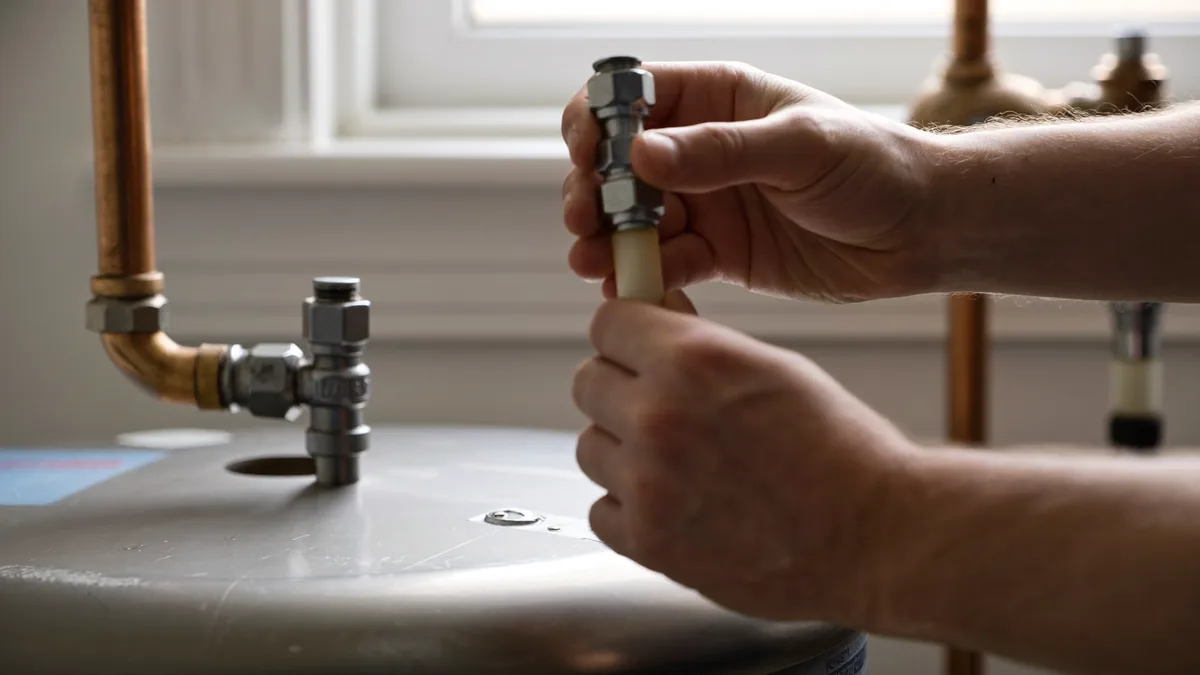
If your hot water smells like rotten eggs, the cause is usually hydrogen sulfide gas produced inside the water heater tank by sulfate-reducing bacteria or a reaction with the anode rod. If only the hot tap smells, suspect the heater. If cold water smells too, check your water supply, especially a private well. Flushing the tank is the first step.
Why Hot Water Smells Like Rotten Eggs
The rotten-egg odor comes from hydrogen sulfide, a gas that forms when certain bacteria and chemical reactions occur in water with sulfates. Water heaters are a common place for this to happen because the tank stays warm, holds water for long periods, and has little oxygen at the bottom where sediment collects. Over time, the smell can build up even when your water supply has no odor at the source.
Sulfate-reducing bacteria
Sulfate-reducing bacteria live in water with little or no oxygen and use sulfates as part of their metabolism. In that process they release hydrogen sulfide. They often settle in sediment at the bottom of the tank, which is why the smell may come back soon after you run the hot tap, especially after a long period of no use.
The anode rod reaction
The anode rod is a metal rod screwed into the top of the tank. It corrodes on purpose so the steel tank wall does not. Magnesium rods protect well, but in water that contains sulfates, the metal can react and contribute to the sulfur smell. Aluminum or zinc rods are often suggested for homes with this problem, and some tanks use a powered anode instead.
Well Water vs. City Water
The source of your water changes what you are likely dealing with. Private wells often contain dissolved hydrogen sulfide or sulfur bacteria from groundwater, so the smell may appear at both taps. City water is usually treated and disinfected before it reaches your home, so a smell limited to the hot side more often points to the heater.
City water can still contain sulfates, and a water heater can still produce the smell from its anode or bacteria. Treat the source as the first thing to rule out, not the last.
Find Where the Smell Starts
Before you open the tank, narrow down the source. This takes about ten minutes and tells you whether you need to focus on the heater or on your water supply.
- Run the cold tap at the kitchen sink for a minute, then sniff the water in a clean glass.
- Run the hot tap at the same sink for a minute, then sniff again.
- Check a second cold tap and a second hot tap elsewhere in the home, such as a bathroom sink or tub.
- If only the hot water smells, the heater or its anode is the likely source. If both hot and cold smell, focus on the supply or your well.
- Note whether the smell is strongest after the water heater has recovered from a draw, or only after the house has been unused for a day or more.
Hot Water Smell or a Gas Leak? Know the Difference
Utilities add an odorant to natural gas so leaks can be noticed, and that odorant is often described as smelling like rotten eggs. A rotten-egg smell in the home is not always bacteria. Before you troubleshoot the water heater, rule out a gas leak.
Signs that point to gas rather than water include a smell that is strongest near a gas appliance or gas line, a hissing sound, a smell in several rooms at once, dead plants near a gas line, or symptoms such as headache or dizziness in people at home. A smell that appears only at the hot tap, and is the same at the cold tap, is much more likely to be water-related.
Gas water heaters made after July 1, 2003 (30, 40 and 50 gallon tank models) are built to a flammable vapor ignition resistant (FVIR) standard, according to the Consumer Product Safety Commission (CPSC). Never store gasoline or solvents near a gas water heater. The CPSC also recommends carbon monoxide alarms on every level of the home and outside sleeping areas.
Safety first: If you smell gas, leave the home right away, do not operate light switches or phones inside, and call the gas utility or 911 from outside. Before you work on an electric water heater, turn off its breaker and verify with a tester that the power is off. Water drained from a hot tank can scald, and according to the CPSC, third-degree burns can occur after about 5 minutes at 120°F.
Flush the Tank and Inspect the Anode Rod
Flushing removes sediment where bacteria tend to grow. It also lets you check the water as it drains, which can show whether the problem is mostly sediment. Plan on about an hour, and have a garden hose and a safe drain location ready.
- Turn off power to an electric heater at the breaker, or set a gas heater's control to the pilot or off position.
- Close the cold water supply valve at the top of the tank.
- Attach a hose to the drain valve at the bottom of the tank and route the other end to a floor drain or outdoors, where hot water will not cause damage or injury.
- Open a hot tap elsewhere in the home to let air in so the tank drains freely.
- Open the drain valve and let the tank empty completely. Briefly open the cold supply to stir up sediment, then drain again until the water runs clear.
- Close the drain valve, remove the hose, open the cold supply, and let the tank refill. Open a hot tap until air stops sputtering out.
- Restore power or gas, and check the smell at both taps after a few days of normal use.
While the tank is drained, you can inspect the anode rod. Use a socket to unscrew the rod from the top of the tank, with the power off and the water shut off. A rod that is mostly bare core wire, heavily pitted, or badly corroded has little protection left, and replacing it is a common step for smell problems. If the rod is fused to the tank head or the fitting is hard to turn, stop and ask a professional for help.
The Department of Energy (DOE) recommends setting a water heater to 120°F as a temperature considered safe for most of the population. Some people raise the thermostat for a short time to address bacteria, but a higher temperature raises the scald risk, so return it to 120°F afterward. People with a compromised immune system or chronic respiratory disease may want to keep it at 140°F, according to the DOE, so ask your doctor before making that choice.
Choosing an Anode Option
The anode type affects both protection and odor. This comparison is qualitative and helps you talk through options with a pro.
| Anode type | Main strength | Odor consideration |
|---|---|---|
| Magnesium | Strong sacrificial protection | Can contribute to sulfur odor in sulfate-rich water |
| Aluminum or zinc | Often suggested when odor is the problem | Generally considered less likely to produce the rotten-egg smell |
| Powered (impressed current) | Protection without a sacrificial rod | Requires an electrical connection and periodic checks |
Ask whether the heater has a compatible anode for your water and tank. A replacement rod does not fix bacteria by itself, so combine it with flushing and temperature checks.
When to Have Your Water Tested
Testing tells you what is in the water rather than guessing. It matters most for private well owners, but it can help anyone whose smell continues after flushing and anode work.
- The smell is present at cold taps as well as hot taps.
- You rely on a private well and have no recent test results on file.
- The smell returns quickly after flushing and an anode replacement.
- The water has discoloration, staining, a metallic taste, or sediment.
- Someone in the home has a health condition and you want to confirm the water is safe to use.
Contact a local water testing laboratory and ask which tests cover hydrogen sulfide, bacteria, and sulfate for your area. Collect the sample using the lab's instructions, and label where it came from, such as the cold kitchen tap or the water heater drain.
When the Water Heater Itself Is the Problem
The DOE says most storage (tank) water heaters last 10 to 15 years, while tankless water heaters can last more than 20 years. If your tank is near the upper end of that range, the smell may be a sign that the tank is wearing out, and replacement can be more practical than repeated repairs.
Other warning signs include rust-colored water, leaks at the tank or fittings, popping or rumbling noises from sediment buildup, and a smell that returns within days after a full flush and anode change. Never cap or plug the temperature and pressure relief valve, and make sure its discharge pipe is intact and unobstructed.
Hiring Help for Repairs or Replacement
If flushing and the anode rod do not solve the smell, or if the tank is old, get at least two written quotes. Check the contractor's license with your state licensing board where licensing applies. Ask who pulls the permits, and confirm with your local building department which permits and inspections your project needs, since rules vary by state and city. Ask what the quote includes, such as haul-away of the old unit, code upgrades, and warranty registration.
Prevent the Smell From Coming Back
- Flush the tank on a regular schedule, and more often if your water carries sediment.
- Inspect the anode rod periodically and replace it when it is badly depleted.
- Keep the thermostat at 120°F unless a health condition calls for a different setting.
- Test your water if you have a private well or if the smell returns after maintenance.
- Keep gasoline, solvents, and other flammable materials away from a gas water heater.
Frequently asked questions
Is a rotten-egg smell in hot water dangerous?
The smell itself usually comes from hydrogen sulfide in the water and is more of a nuisance than an emergency. However, a rotten-egg smell can also come from a natural gas leak, which is serious. If the odor is strong near a gas appliance, you hear hissing, or several people feel unwell, leave the home and call the gas utility or 911 from outside.
Can I just run the hot water to get rid of the smell?
Running the hot tap may clear the smell for a short time, but it does not remove the bacteria or sediment in the tank. The smell often returns once the water sits again. Flushing the tank and checking the anode rod address the source more directly.
Will replacing the anode rod stop the smell?
Replacing the anode rod can help if the rod is the source, especially if it is magnesium and your water has sulfates. It may not solve the problem if bacteria in sediment are the cause or if the smell comes from your water supply. Combine the rod change with flushing and a water test if the smell continues.
Why does the smell only come from the hot tap?
Hot water is where sulfate-reducing bacteria and the anode reaction are most active. The tank is warm, holds water for long periods, and collects sediment at the bottom. When the smell appears only at the hot tap, the water heater is the most likely source.
How long should a water heater last before I consider replacing it?
According to the U.S. Department of Energy, most storage (tank) water heaters last 10 to 15 years, while tankless water heaters can last more than 20 years. If your tank is near the end of that range and the smell keeps returning after maintenance, replacement may be more practical. Confirm current guidance on the energy.gov website.