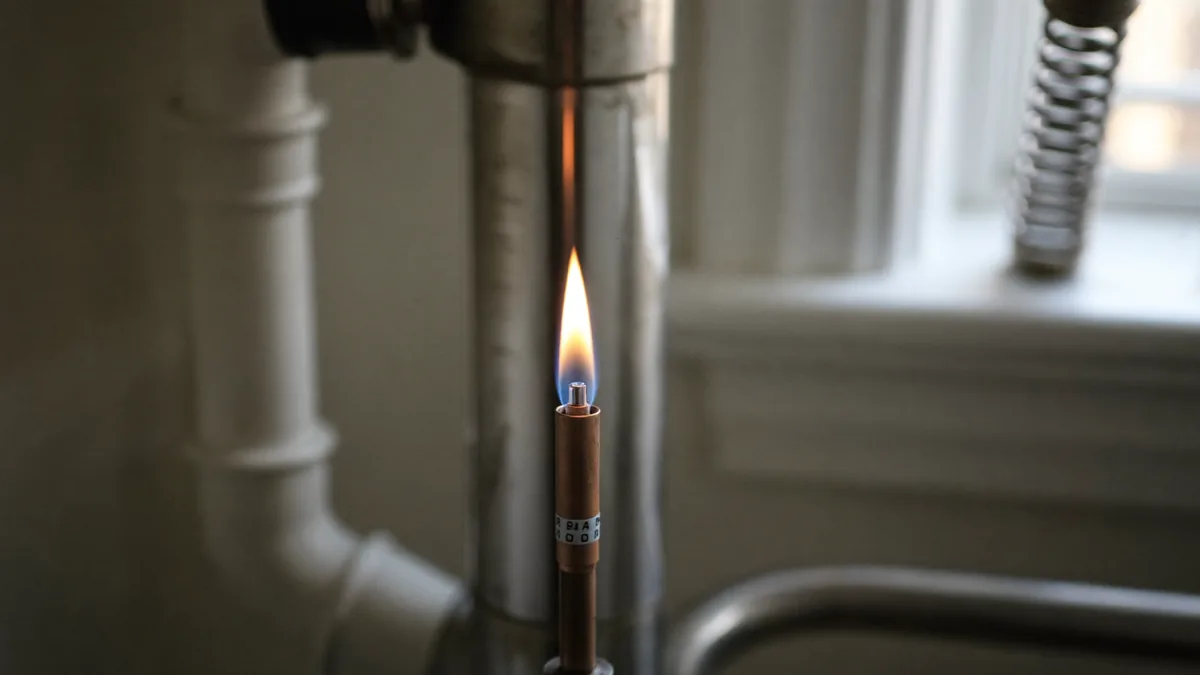
A water heater thermocouple is a safety sensor at the pilot flame. If it does not sense enough heat, it tells the gas valve to shut off, so the pilot drops out when you release the knob. Causes include a dirty or failing thermocouple, weak draft, a blocked vent, a tripped flammable vapor sensor, and low gas supply.
What the water heater thermocouple does
When you hold the gas control knob in and light the pilot, the flame heats the tip of the thermocouple. That heat produces a small electrical signal that keeps the gas valve open. If the flame stops heating the tip enough, the signal drops, the valve closes, and the pilot goes out.
Some units use a thermopile, a group of thermocouples wired together, which makes enough power to hold the valve open. The symptoms are similar. Units with electronic ignition use a flame sensor instead, so check the label or manual to confirm which part your unit has.
Common causes of a pilot that won't stay lit
A dirty or failing thermocouple
Soot, dust and scale can coat the tip so it cannot heat properly. Over time the thermocouple itself weakens, and the tip may not produce enough signal even when the flame looks normal. If the pilot stays lit after cleaning but fails again soon after, the part is likely worn out.
A weak flame has the same effect. A small, lifting or yellow pilot does not surround the tip, so the thermocouple cannot get hot enough. Debris in the pilot opening is a frequent reason for a weak flame.
Loose or corroded connections
The thermocouple wire connects to the gas valve through a small fitting. If that fitting is loose or corroded, the signal weakens even when the tip is hot. This is easy to overlook, and a qualified pro can test it with the proper tools.
Draft and venting problems
A gas water heater burns fuel and sends combustion gases up the flue. If those gases do not rise and leave through the vent, they can spill back around the draft hood into the room. Spillage can cool the pilot and blow it out, which is a common cause when the heater shares a space with other appliances.
Several conditions weaken draft:
- A blocked vent cap, a bird nest, or debris in the flue
- Rust, holes or separated joints in the vent pipe, or a vent connector that sags
- Exhaust fans, a range hood or a clothes dryer pulling air out of the house faster than fresh air can enter
- A home sealed so tightly that the heater has little air for combustion
- A vent that was changed during a remodel, such as one sized for a different heater
Signs of a venting problem include soot on the burner area or draft hood, rust or staining near the draft hood, a flame that flickers or leans toward the room, and a stale or burnt smell. Because a vent problem can allow carbon monoxide into the home, the CPSC recommends carbon monoxide alarms on every level of the home and outside sleeping areas. Test the alarms you already have.
Flammable vapor sensors on FVIR water heaters
According to the CPSC, gas water heaters made after July 1, 2003 (30, 40 and 50 gallon tank models) are built to a flammable vapor ignition resistant (FVIR) standard. The same agency reported that gas water heaters igniting flammable vapors had been linked to about 800 fires a year before that standard took effect.
On many FVIR designs, a flammable vapor sensor is a separate part near the burner that shuts off gas if vapors ignite there. If it trips, the pilot may go out and will not stay lit. The sensor is doing its job, so the fix is to find and remove the vapor source rather than defeat the sensor.
Vapors often come from gasoline, solvents, paint thinners, or aerosol cans stored in a closet or garage bay near the heater. Never store gasoline or solvents near a gas water heater.
Gas supply problems
A pilot needs a steady flow of gas at the right pressure. Common supply issues include a partly closed gas shutoff valve on the supply line, a failing gas valve on the heater, or a supply line that is too small for the appliances it serves. Pressure can dip when a furnace, range or dryer starts up.
If the pilot only goes out when another gas appliance runs, suspect the supply. Measuring gas pressure and testing the gas valve are jobs for a qualified pro, and your gas utility can check the supply at the meter.
What you can check safely
Safety first: If you smell gas, do not light anything or flip any switch. Leave the home and call the gas utility or 911 from outside.
If there is no gas odor, work through these checks in order:
- Read the label on the unit and the owner's manual for the relight procedure. Follow each step as written.
- Look at the pilot flame through the sight opening if your unit has one. A healthy pilot is steady, mostly blue, and surrounds the thermocouple tip. A small, lifting or yellow flame points to a partly blocked opening, weak gas flow or draft trouble.
- Check the gas control knob position and the shutoff valve on the supply line. The shutoff handle should line up with the pipe, which means fully open.
- Note when the pilot goes out. Does it happen when you release the knob, when a fan runs, when another gas appliance starts, or on cold days? The pattern narrows the cause.
- Run the bathroom and kitchen exhaust fans for a few minutes while you watch the pilot. A flame that drops or leans toward the room suggests a draft problem.
- Look at the vent cap and the visible vent pipe from the ground or a window. Look for blockage, rust, separated joints and nests.
- Look around the heater for soot, rust on the draft hood, and any stored gasoline, solvents or paint. Move flammable materials to a safe outdoor location.
- Relight the pilot and hold the knob in for the full time the manual specifies, then release it. If the pilot drops out as soon as you let go, the thermocouple is probably not producing enough heat.
If the manual allows it and the gas is off, a soft brush can remove soot from the thermocouple tip and the pilot opening. Do not bend the thermocouple or force anything into the pilot opening.
When thermocouple replacement needs a pro
Some homeowners replace a thermocouple themselves, but the job involves the gas valve and the pilot assembly. Call a qualified pro who works on gas appliances if any of these apply:
- The pilot still goes out after you have cleaned the flame area and confirmed the gas valve is open
- You suspect a draft or venting problem, or you see soot, rust or staining near the draft hood
- The gas valve, the thermocouple connection or the thermopile needs replacing, and you are not comfortable with gas connections
- The flammable vapor sensor trips repeatedly
- You suspect a gas pressure or supply issue
- You see water leaking from the tank, which can mean the tank itself is failing
Check with your local building department about whether a permit is needed for vent or gas work. Requirements vary by state and city.
When you hire someone, get at least two written quotes. Check the contractor's license with the state licensing board where licensing applies, and ask who pulls any permits. Ask what the quote includes, such as haul-away, code upgrades and warranty registration.
How to prevent a pilot outage
- Keep the area around the heater free of paints, solvents, gasoline and cleaning chemicals.
- Have the vent inspected periodically and after any remodel. Keep the vent cap clear and screened against nests.
- Keep exhaust fans and dryer vents in good condition, and avoid setups that pull air strongly from the space around the heater.
- Keep the burner area clean during routine checks, and address a weak pilot flame early.
According to the U.S. Department of Energy, most storage (tank) water heaters last 10 to 15 years. If the pilot keeps failing on an older tank, weigh the repair against the age of the unit before paying for another fix.
Frequently asked questions
Can a homeowner handle thermocouple replacement?
Some homeowners do the job, but it means working with the gas line, the gas valve and the pilot assembly. First confirm the thermocouple is the problem using the test in the checks list above. Buy a replacement that matches the part number on your unit's label, follow the manual, and stop if the connection or valve looks damaged. If you are unsure, hire a qualified pro.
Why does the pilot go out as soon as I release the knob?
That symptom usually means the thermocouple is not producing enough signal. The flame may be too small, the tip may be coated, or the connection may be weak. Draft problems and a partly blocked pilot opening can also keep the flame from fully surrounding the tip. Clean what you can with the gas off, relight, and test again. If it still drops out, the part may need replacing.
What does a flammable vapor sensor do on a water heater?
On FVIR units, the sensor is designed to shut off gas to the burner if flammable vapors ignite there. According to the CPSC, gas water heaters made after July 1, 2003 (30, 40 and 50 gallon tank models) are built to the FVIR standard. If the sensor trips, the pilot may go out. Look for flammable vapors nearby and remove them. Do not bypass the sensor.
Can a venting problem cause the pilot to go out?
Yes. If combustion gases are not rising through the vent, they can spill into the room and disturb the pilot flame, which can cool the thermocouple. Look for blockage at the vent cap, loose vent joints, rust, and exhaust fans that pull air from the room. The CPSC recommends carbon monoxide alarms on every level of the home and outside sleeping areas.
How long should a gas water heater last with repeated repairs?
According to the U.S. Department of Energy, most storage (tank) water heaters last 10 to 15 years, while tankless water heaters can last more than 20 years. A thermocouple repair is usually a small job, but repeated pilot failures on an older tank can point to wider wear. Compare the unit's age, the number of repairs, and any leaks before deciding whether to repair or replace.