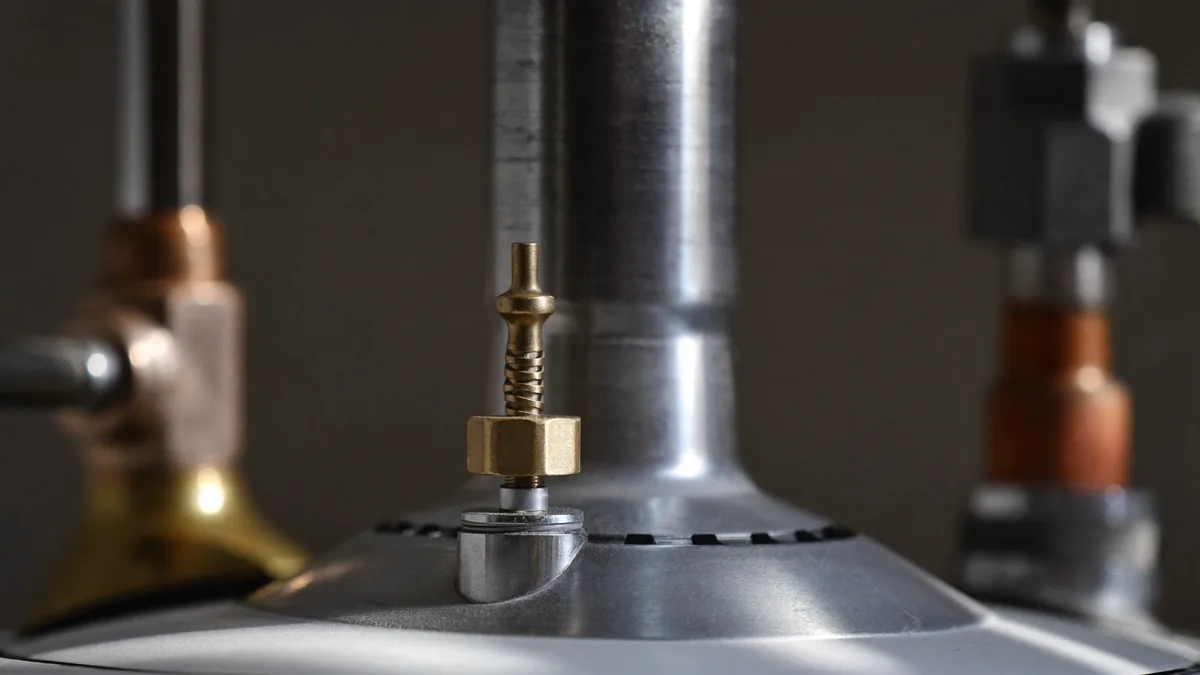
To light a water heater pilot light safely, read the label on the unit, turn the gas control to OFF, and wait for any gas to clear before you strike a flame. Standing-pilot units follow a set sequence, while electronic ignition units have no pilot to light.
Why a water heater pilot light goes out
A standing pilot is a small, continuous gas flame that ignites the main burner when the water needs heating. A sensor called a thermocouple sits in that flame and tells the gas valve to stay open. If the flame drops out, the sensor cools and the valve shuts off the gas.
Common causes include a draft that pushes the flame away from the sensor, a dirty or partly blocked pilot opening, a worn thermocouple, and a brief interruption in the gas supply. Sometimes the pilot goes out after a power outage or after someone turns the control to OFF. Knowing the likely cause helps you decide whether relighting is reasonable or whether you need a pro.
Read the label before you touch anything
Most gas water heaters have a label on the tank or the access panel with lighting instructions. That label is written for your exact model, so it outranks any general sequence, including the one below. Before you start, look for:
- Whether the unit is standing-pilot or electronic ignition.
- The position names on the gas control, such as OFF, PILOT and ON.
- How long to wait before lighting, and how long to hold the reset or pilot button.
- Any warning about gas odor or flammable materials.
Next, look at the space around the unit. Remove boxes, laundry and other combustible items from the area, and make sure you can see the pilot opening clearly before you work near it.
How to light a water heater pilot on a standing-pilot unit
Use this general sequence only where the label does not say otherwise. Work slowly, keep your face away from the access opening, and use a long lighter or a fireplace match rather than something that could flare.
- Set the gas control to OFF. Wait until any gas odor has cleared, and wait at least as long as the label specifies.
- Turn the gas control to PILOT. Do not skip this position, because it routes gas to the pilot only.
- Press and hold the reset or pilot button down. On some units this is a button you push in, and on others it is a knob you press and turn.
- While holding the button, light the pilot through the access opening. Watch for a steady blue flame around the pilot, not a yellow or lifting one.
- Keep holding the button for the time the label gives, then release it slowly. Holding a little longer lets the thermocouple heat up enough to keep the valve open.
- If the pilot stays lit, turn the control to ON or to the temperature setting on the label. If it goes out, stop and wait before trying again.
- Replace the access panel, then check the flame again after the unit has run for a while.
If the pilot will not stay lit
If the flame goes out as soon as you release the button, the thermocouple probably did not warm enough. Try the sequence once more and hold the button a little longer. If it fails a second time, stop. Repeated attempts can let unburned gas collect around the burner, and a weak or dirty flame usually means a part needs attention.
Electronic ignition units have no pilot to light
Many newer gas water heaters use an electronic igniter instead of a continuous flame. You may hear a click or a series of clicks when the burner calls for heat, but there is no pilot to light by hand. If the unit will not heat, the problem is usually a gas supply, power or control issue rather than a pilot.
Check these items in order:
- Confirm the gas supply valve on the supply pipe is open, and that the gas control is set to ON.
- Check the power source. A unit that plugs in needs a working outlet, and a battery-powered control needs a fresh battery. For a hardwired unit, look at the breaker panel. If a breaker has tripped, reset it once. If it trips again, stop and have a pro look at the unit.
- Look at the thermostat setting. If it is set below the temperature of the water in the tank, the burner will not run.
- If the label shows a high-limit reset button, follow its instructions for when and how to press it.
- If the igniter clicks repeatedly with no flame, stop. Do not keep cycling the power, because that only repeats the same failure.
What to do if you smell gas
Safety first: A rotten-egg odor, a hissing sound near the unit or gas line, or a gas smell you cannot place means you should treat it as a leak. Do not light anything, flip light switches, use a phone or operate appliances inside. Leave the home right away, and call the gas utility or 911 from outside.
Do not try to find the source or relight the pilot while you suspect a leak. Stay out until the utility or emergency responders confirm that the home is safe.
When to stop and get a pro involved
Relighting is a reasonable first step when a pilot goes out once. Stop and bring in a pro if any of these happen:
- The pilot goes out repeatedly after you relight it correctly.
- The flame is yellow, lifts off the burner or leaves soot.
- You smell gas at any time, even after the unit is off.
- Water leaks from the tank, the fittings or the relief valve.
- The relief valve discharges water, or its discharge pipe is damaged, capped or missing.
The temperature and pressure relief valve must never be capped or plugged. According to the International Residential Code (P2804.6.1, 2021 edition, as summarized by the International Code Council), its discharge pipe must not connect directly to the drainage system. It must end in an air gap in the same room, must not be trapped or threaded, and must end no more than 6 inches above the floor or a waste receptor. Requirements vary by state and city, so check with your local building department. Any repair to a gas line, the burner or the relief valve should go to a licensed professional.
Preventing pilot outages and gas hazards
Routine habits prevent most surprises. Keep the area around the unit clear, and keep the access panel closed once the unit is running so drafts do not reach the flame.
Set the thermostat to 120°F. According to the U.S. Department of Energy, 120°F is a temperature considered safe for most of the population. Water heating is about 18% of a home's energy use, so the setting also matters for your energy bill. The DOE notes that people with a compromised immune system or chronic respiratory disease may want to keep the setting at 140°F, so ask your doctor if that applies to your household.
Install carbon monoxide alarms. The CPSC recommends them on every level of the home and outside sleeping areas. Also note that the CPSC says gas water heaters igniting flammable vapors had been linked to about 800 fires a year. That is why gas water heaters made after July 1, 2003, in the 30, 40 and 50 gallon tank models are built to a flammable vapor ignition resistant (FVIR) standard.
Plan for age. According to the DOE, most storage tank water heaters last 10 to 15 years, and tankless water heaters can last more than 20 years. If your tank is near the end of that range and the pilot keeps failing, a replacement may be a better use of money than repeated repairs.
Finding a pro for repairs or replacement
When you need a repair or a new unit, get at least two written quotes so you can compare what each one includes. Check the contractor's license with your state licensing board where licensing applies. Ask whether permits are needed and who will pull them. Then ask what the price includes, such as haul-away of the old unit, code upgrades and warranty registration.
Frequently asked questions
Why does my water heater pilot light keep going out?
A pilot that keeps going out usually points to a worn thermocouple, a dirty or partly blocked pilot opening, a draft near the unit, or a gas supply problem. Relighting it correctly once is reasonable. If it goes out again soon after you relight it, stop and have a pro check the flame, the sensor and the gas connections. Repeated relighting attempts do not fix the underlying cause.
Can I light an electronic ignition water heater by hand?
Usually not, because these units have no pilot to light by hand. Instead, confirm the gas supply valve is open, the thermostat is set above the water temperature, and the power source is working. If the igniter keeps clicking without producing a flame, stop and have a pro look at the unit rather than repeatedly cycling the power.
What temperature should I set my water heater to?
According to the U.S. Department of Energy, 120°F is a temperature considered safe for most of the population. People with a compromised immune system or chronic respiratory disease may want to keep the setting at 140°F. Ask your doctor if that applies to someone in your household. Check the setting after any change, since the dial position does not always match the actual water temperature.
How long does a water heater usually last?
According to the U.S. Department of Energy, most storage tank water heaters last 10 to 15 years, while tankless water heaters can last more than 20 years. Frequent pilot problems, leaks and rust at the base of the tank are signs that replacement may make more sense than another repair. Check the label on the unit for its manufacture date to see where it stands.
Do I need a permit to replace a gas water heater?
Permit rules differ by state and city, so you cannot assume a replacement is exempt. Ask any contractor who will pull the permit, and whether the quote covers any required code upgrades. A written quote that spells out these details makes it much easier to compare offers and avoid surprises after the work is done.