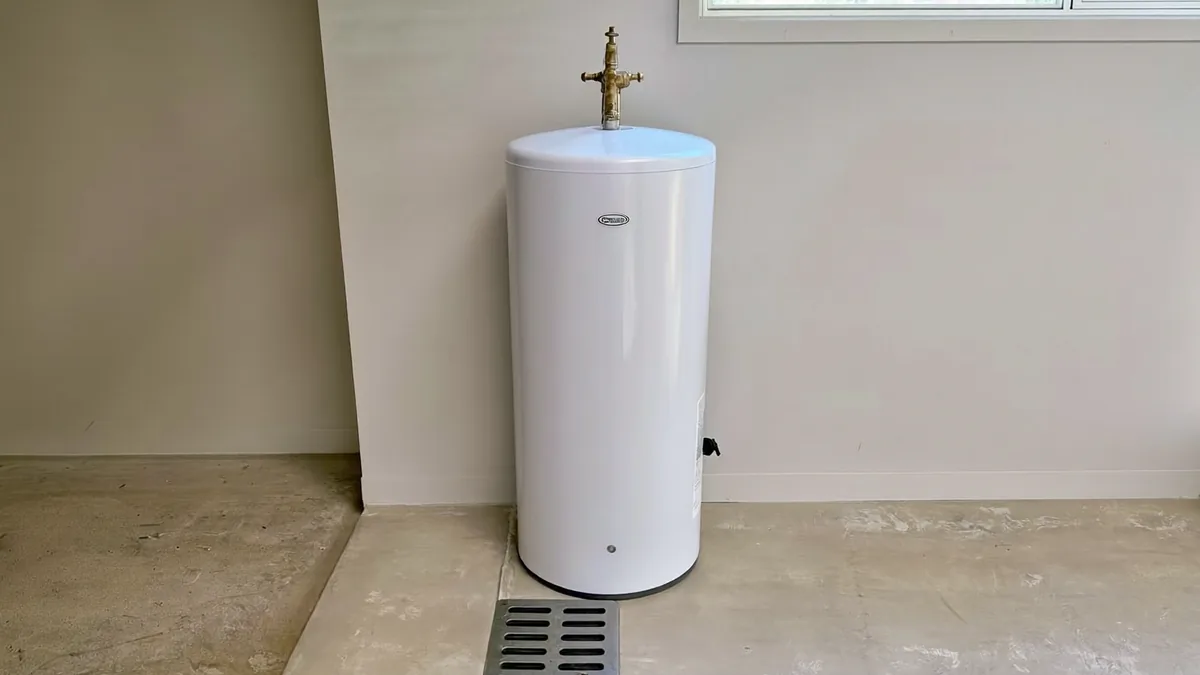
Set your water heater thermostat to 120°F, the temperature the U.S. Department of Energy describes as safe for most people. At that setting, scald injuries are far less likely, and the water is still hot enough for everyday use. Some households need a higher tank temperature for Legionella control, and a tempering valve makes that practical.
Why 120°F is the standard water heater thermostat setting
The U.S. Consumer Product Safety Commission (CPSC) recommends setting water heaters to 120°F. Scald severity depends on both temperature and exposure time. According to the CPSC, third-degree burns can occur after the following exposure times:
| Water temperature | Time to third-degree burn (per CPSC) |
|---|---|
| 150°F | about 2 seconds |
| 140°F | about 6 seconds |
| 130°F | about 30 seconds |
| 120°F | after about 5 minutes |
Small differences in the setting make a large difference in how quickly a burn can happen. At 120°F, the risk is much lower, but it is not zero, especially for young children and older adults who may not move away from hot water quickly. Keep the setting at 120°F unless you have a specific reason to go higher.
Legionella and when a higher tank temperature makes sense
According to the DOE's Federal Energy Management Program (FEMP), Legionella can grow in water heaters under certain conditions. That is the main reason some households run the tank hotter than 120°F. Lukewarm water sitting in a tank is the condition to avoid, so the tank itself matters as much as the taps.
The DOE's Energy Saver Guide notes that people with a compromised immune system or chronic respiratory disease may want to keep the setting at 140°F. At that temperature, scald risk at the tap rises sharply, so a tempering valve is the standard way to pair a hotter tank with safe water at the faucets. If you have a health condition that affects your immune system or lungs, talk with your doctor before you change the setting.
How a mixing valve protects you at the tap
A tempering (mixing) valve sits on the hot water outlet of the tank. It blends hot water with cold water so that the water delivered to your fixtures stays at a safe temperature. FEMP advises setting the tempering valve to 120°F, which lets the tank run hotter without scald risk at the tap.
A mixing valve reduces risk but does not remove it. Valves can drift out of calibration over time, and a change in the cold supply can change the output. After any change, test the hot water at a tap, and have a professional check the valve if the temperature seems to shift.
How to adjust a gas or electric water heater thermostat safely
Safety first: If you smell gas, leave the home right away and call the gas utility or 911 from outside. For an electric unit, turn off the breaker and use a voltage tester to confirm the power is off before you remove any access panel. If you are unsure which control you are looking at, stop and call a professional.
Gas water heater
- Locate the temperature dial on the gas control valve, usually on the front of the tank near the bottom.
- Before changing anything, run the hot tap for a moment and check the temperature with a thermometer.
- Turn the dial a small amount, and note the new position.
- Wait until the tank has fully reheated before testing again.
- Check the water at the hot tap, and repeat the adjustment in small steps if needed.
Electric water heater
- Turn off the breaker for the water heater and confirm with a voltage tester that power is off.
- Remove the access panel and insulation cover over the thermostat.
- Many electric units have an upper and a lower thermostat. Set both to the same temperature.
- Replace the insulation and panel, restore power at the breaker, and wait for the tank to reheat.
- Test the hot water at a tap and make small corrections if needed.
Check the temperature and pressure relief valve and its discharge pipe
The temperature and pressure relief valve is a safety device. It must never be capped or plugged. Its discharge pipe should meet the rules in the International Plumbing Code section 504.6 and the International Residential Code section P2804.6.1 (2021 editions), as summarized by the International Code Council:
- No direct connection to the drainage system.
- The pipe ends in an air gap in the same room.
- The pipe is not smaller than the valve outlet.
- The pipe is not trapped and drains by gravity.
- The end is no more than 6 inches above the floor or a waste receptor.
- No threaded end, and no valves or tees.
The valve itself should be rated for 100 psi at 180°F. Codes vary by state and city, so check with your local building department before you change the discharge piping.
How the setting affects energy use and hot water supply
According to the DOE, water heating is about 18% of a home's energy use. A lower, appropriate setting reduces the energy the tank spends keeping water hot, so there is no benefit to running it higher than you need. Lowering the setting is also the safer choice for most households.
If you lower the setting and run short of hot water, capacity is often the real issue. The First-Hour Rating on a storage tank label estimates how much hot water the tank can supply in an hour starting fully heated. For tankless units, the Maximum GPM rating shows the gallons per minute the unit can supply. Federal maximum showerhead flow is 2.5 gallons per minute at 80 psi, according to DOE (10 CFR 430.32), so a tank that is sized correctly for your household is more useful than a hotter setting.
When comparing replacement units, the Uniform Energy Factor (UEF) is the federal measure of overall efficiency, and it is a better comparison point than the thermostat setting.
Common mistakes to avoid
- Raising the tank setting to solve a sizing or demand problem instead of addressing the cause.
- Skipping the tap test after an adjustment, or testing before the tank has reheated.
- Assuming a tempering valve makes any tank setting safe without checking the temperature at the tap.
- Capping, plugging or reducing the relief valve or its discharge pipe.
- Adjusting both thermostats on an electric unit to different temperatures.
- Ignoring a relief valve that drips or discharges steadily.
When to call a licensed professional
Call a licensed plumber or qualified heating technician when the problem goes beyond a simple dial adjustment. Get help promptly in these situations:
- The tap water stays too hot after you have lowered the setting and allowed the tank to reheat.
- The thermostat dial moves freely, does not respond, or the water temperature keeps changing.
- The relief valve drips steadily or discharges, or its piping looks altered.
- The mixing valve output changes, or a tempering valve is missing from a unit that needs one.
- The tank is near the end of its typical life. According to the DOE, most storage tank water heaters last 10 to 15 years, while tankless water heaters can last more than 20 years.
Finding a pro for thermostat and valve work
Get at least two written quotes before any work starts. Check the contractor's license with the state licensing board where licensing applies. Ask whether permits are required and who will pull them, and ask what the quote includes, such as haul-away of the old unit, any code upgrades and warranty registration.
Frequently asked questions
What is the best water heater thermostat setting for most homes?
The U.S. Department of Energy recommends 120°F, which it describes as a temperature considered safe for most of the population. The CPSC also recommends 120°F. At this setting, the risk of a serious scald is much lower than at higher settings, and the water is still hot enough for showers, dishes and laundry. Households with specific health conditions may need a different approach, which is covered above.
Will a 120°F setting leave me short of hot water?
Not usually, because the thermostat is only one part of supply. Check the First-Hour Rating on a storage tank label or the Maximum GPM on a tankless unit to see whether the unit is sized for your household. Federal showerhead limits are 2.5 gallons per minute at 80 psi. If you still run short, a capacity or demand problem is more likely than the setting itself.
Why would someone keep the tank hotter than 120°F?
The main reason is Legionella control. According to FEMP, Legionella can grow in water heaters under certain conditions, and the DOE notes that people with a compromised immune system or chronic respiratory disease may want to keep the setting at 140°F. A higher tank temperature only works safely at the tap with a tempering valve set to 120°F. Talk with your doctor before you make that change.
Can a tempering valve replace a lower tank setting?
A tempering valve does not lower the tank temperature. It blends hot and cold water at the outlet so the taps stay at a safe level while the tank runs hotter. If you simply want the tank at 120°F, set it there and skip the valve. A valve is most useful when you need a higher tank temperature, and it still needs periodic checks because valves can drift.
How long should a water heater last, and when is replacement worth considering?
According to the DOE, most storage tank water heaters last 10 to 15 years, and tankless water heaters can last more than 20 years. Consider replacement when a unit is near the end of its typical life, leaks from the tank, or cannot hold a steady temperature. Get at least two written quotes and compare what each one includes.