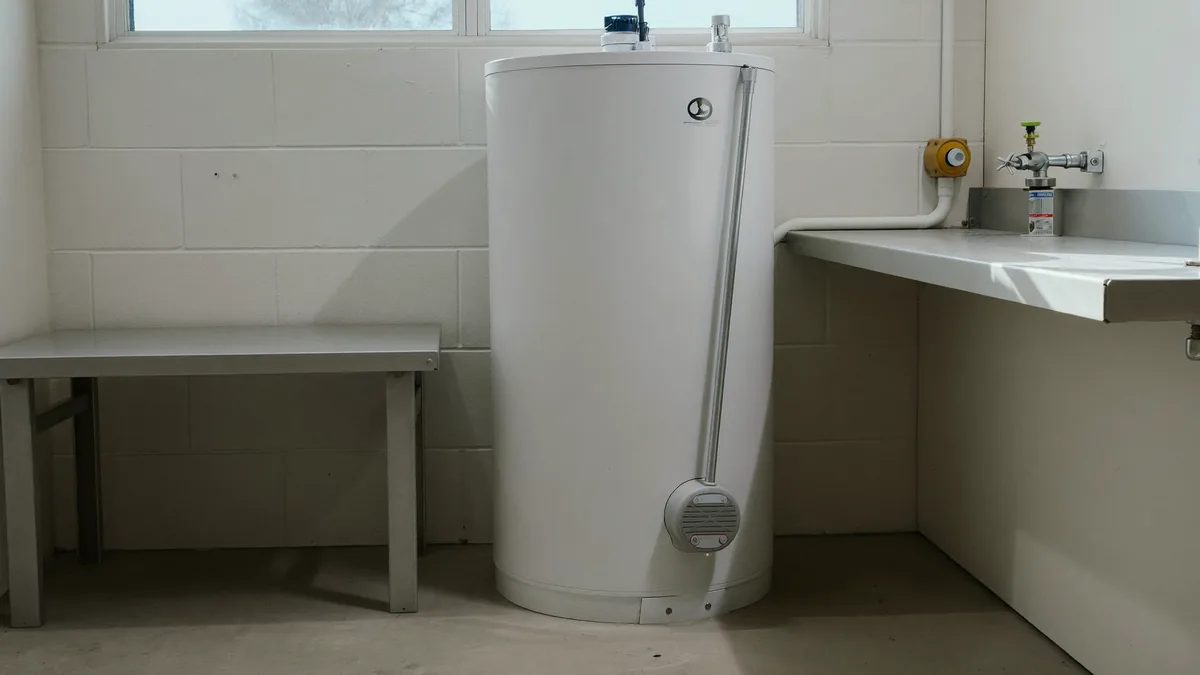
A water heater anode rod is a metal rod, usually magnesium, aluminum or an aluminum-zinc alloy, that hangs inside the tank and corrodes so the steel tank does not. To check it, shut off power or gas and the water supply, unscrew the rod from the top of the tank, and look for a thin rod or a bare steel core wire. Replace the rod when the core shows through or the rod is mostly gone.
What a water heater anode rod does
Water is a mild electrolyte, and steel corrodes when it sits in contact with water over time. The anode rod is made of a more reactive metal, so it corrodes first. This is why it is called a sacrificial anode: it gives up its own material to protect the tank lining and the steel shell.
The rod screws into a fitting on the top of a storage (tank) water heater and reaches down into the water. As long as some of the rod remains and stays in electrical contact with the tank, it keeps protecting the steel. Once it wears away, the steel is exposed and corrosion can start on the tank wall.
According to the U.S. Department of Energy, most storage water heaters last 10 to 15 years. A rod that is nearly gone in a tank several years old is a good reason to look more closely at the tank and your water conditions, not just the rod.
Magnesium, aluminum and powered anodes
Magnesium rods are the most common type. They are very reactive, so they protect the tank well, but they wear faster and can react with some water chemistry. In some homes, a magnesium rod can contribute to a rotten egg smell from the hot water, because of sulfur compounds produced during corrosion.
Aluminum and aluminum-zinc alloy rods are less reactive. They wear more slowly and are often chosen to reduce the sulfur smell, but they protect less strongly in some water conditions. Ask a pro or check the manufacturer's manual to see which type your tank was built for before you buy a replacement.
A powered anode, sometimes called an impressed current anode, does not rely only on being consumed. It uses a small low-voltage power source and a controller to push protective current into the tank. These units need electricity to work, and a dead controller or failed power supply leaves the tank unprotected even if the rod looks fine. Check the indicator light if your model has one, and follow the manual for any testing.
Signs the anode rod is depleted
The rod itself gives the clearest answer. Other symptoms usually show up only after the rod is largely gone, so they are useful clues but not proof on their own.
- Bare steel core wire: When the outer metal is consumed and the steel wire inside is showing along much of its length, the rod has done its job and needs replacing.
- Thin or pitted rod: A rod that has shrunk noticeably, looks pitted, or breaks into pieces is depleted.
- Rotten egg smell: Hot water that smells like sulfur can point to a magnesium rod reacting with the water, though the smell has other causes too.
- Rust-colored or discolored water: Rust in the hot water can come from the tank once protection is gone, but it can also come from sediment or old pipes, so test with a second look at the tank.
- Tank leaks or rust at the base: Corrosion on the outside of the tank or water pooling under it is a serious sign that the tank itself is failing. At that point, the rod is no longer the main question.
Safety first
Turn off power before touching any part of the heater. For an electric unit, switch off the breaker and confirm there is no power with a voltage tester before you open the access panel or touch wiring. If you smell gas, leave the home and call the gas utility or 911 from outside. Hot water can cause serious burns, and the CPSC notes that third-degree burns can occur after about 5 minutes at 120°F, so let the tank cool before you drain or remove anything.
How to check the anode rod
Plan the check for a time when you can live without hot water for a while. Keep a bucket, towels and a helper nearby. The steps below apply to most tank heaters, but your manual may list a different order or extra steps.
- Turn off power at the breaker for an electric heater, or set the gas control to pilot or off for a gas heater. Let the water cool for several hours if you can.
- Close the cold water supply valve feeding the heater.
- Attach a garden hose to the drain valve near the bottom of the tank and run it to a floor drain or outside. Open a hot tap elsewhere in the home to let air in and speed draining.
- Drain until the water level is below the anode fitting, which is usually on the top of the tank. Some tanks need less draining than others, so check the level before you loosen anything.
- Find the anode, which is a hex-head fitting on the top of the tank. It may be under a cover or near the hot water outlet.
- Loosen the fitting with a socket or breaker bar, turning counterclockwise. Use steady pressure and avoid jerking the tank, because a stuck rod can crack the fitting or the tank top.
- Pull the rod out and inspect it. Look for a thin rod, a bare core wire, heavy pitting or mineral buildup.
- Compare the rod with a new one of the same type, or measure how much of it remains. If the rod is mostly consumed, plan to replace it.
Some rods are very stuck from years of mineral buildup. If the fitting does not move with a steady hand-powered tool, stop and consider a pro rather than forcing it.
Replacing an anode rod: overview
Replacement is a straightforward job if the rod comes out easily and the tank threads are in good shape. Start by matching the new rod to the old one for thread size, diameter and overall length. Also consider the rod material, since the manufacturer's manual may specify one.
- Install the new rod with thread sealant or tape as the manual or the rod packaging describes, and tighten it firmly without overtightening.
- Close the drain valve and remove the hose.
- Open the cold supply valve and let the tank fill. Open a hot tap to push out trapped air, then close it when water runs steadily.
- Check the anode fitting and the drain valve for leaks, then restore power or gas.
Do not cap or plug the temperature and pressure relief valve at any point during the work. The International Residential Code requires the relief valve to be able to discharge freely, and a plugged valve can build up dangerous pressure in the tank.
Clearance limits and when a rod will not fit
Clearance is the most common reason a replacement stalls. A standard rod needs straight vertical room above the tank to slide out. If the ceiling, a water line or a cabinet sits too close, you may not be able to remove the old rod or install a new one at full length.
- Measure the space above the tank before you buy. Compare it with the rod length on the old rod or the replacement you plan to buy.
- Consider a flexible or segmented rod if you have limited overhead room. These rods are designed to bend or assemble in place, but check the product details to confirm they suit your tank.
- Check the tank threads if the fitting is stripped or the rod leaks. A damaged fitting may need a professional repair or a different solution.
- Do not cut a standard rod to make it fit unless the manufacturer or the rod packaging says it can be cut. Cutting can change how the rod protects the tank.
When to call a professional
Some checks are simple enough to do yourself, but a pro is the better choice when the rod is badly seized, the fitting or tank threads are damaged, the tank is leaking, or the heater is a powered anode unit with electrical or controller problems. A pro is also a good idea if you are not sure about gas connections or wiring, or if the tank looks old and corroded.
When you look for help, get at least two written quotes that list the same work. Check the contractor's license with your state licensing board where licensing applies. Ask who pulls any permits and whether your city or county requires one, since rules vary by jurisdiction, so check with your local building department. Ask what is included, such as haul-away of the old tank or rod, any code upgrades, and warranty registration.
How to prevent early anode wear
Regular inspection is the simplest prevention. Follow the manufacturer's manual for anode checks, since intervals vary by model and water conditions. Many manufacturers recommend flushing the tank at least once a year, and a flush is a good time to look at the rod. Flushing removes sediment, which can speed corrosion when it covers the tank bottom and the rod.
Water chemistry affects how fast a rod wears. Hard water, high dissolved minerals and certain water treatment systems can change how quickly the rod is consumed. If you have a water treatment system, ask your installer or service provider how it may affect the tank and the rod.
Set the thermostat to 120°F, which the U.S. Department of Energy describes as a temperature considered safe for most people. Lower temperatures reduce scald risk, and keeping the tank at a steady setting makes it easier to notice changes in performance.
Frequently asked questions
How often should I check my water heater anode rod?
Check the manufacturer's manual first, because recommended intervals differ by model and water quality. Many manufacturers recommend flushing the tank at least once a year, and that is a good time to pull the rod and inspect it. If your water is hard or your tank is several years old, check it sooner than you might otherwise. A rod that is already mostly gone is a clear sign to check every year.
Can I replace the anode rod myself?
Many homeowners can do the replacement if the rod comes out easily, the power or gas is off, and the work stays on the rod and fitting. If the rod is stuck, the fitting leaks, or you are unsure about gas or electrical work, a pro is the safer choice. Follow the manual, shut off the power and water first, and avoid any work that requires opening gas or wiring connections you do not understand.
What is the difference between a magnesium and an aluminum anode rod?
Magnesium rods are very reactive, so they protect the tank strongly but wear faster. Aluminum and aluminum-zinc rods are less reactive, so they wear more slowly and are often chosen when a sulfur or rotten egg smell is a problem. Protection level depends on your water, so check the manual or ask a pro which type suits your tank before you buy.
Do powered anode rods need replacing?
Powered anodes do not wear out the same way as standard rods, but they depend on a working controller and power supply. If the indicator light is off, or the unit shows a fault, the tank may be unprotected even if the rod looks new. Follow the manual for testing, and call a pro if the controller or wiring needs service, because electrical work carries real shock risk.
Will a new anode rod fix a leaking water heater?
Usually not. A new rod protects the tank from future corrosion, but it does not seal a leak that already exists in the tank wall or a damaged fitting. If water is pooling under the tank, or the leak comes from the tank body, the tank itself may be failing. Get a pro to look at the leak before you spend money on a rod alone.
Is there a size or length I should buy for the replacement rod?
Match the replacement to the old rod for thread size, diameter and length, and check the tank's manual or the rod packaging for the correct specification. If the overhead space is limited, a flexible or segmented rod may fit where a straight rod cannot. Measure the room above the tank before you buy so you do not end up with a rod you cannot install.