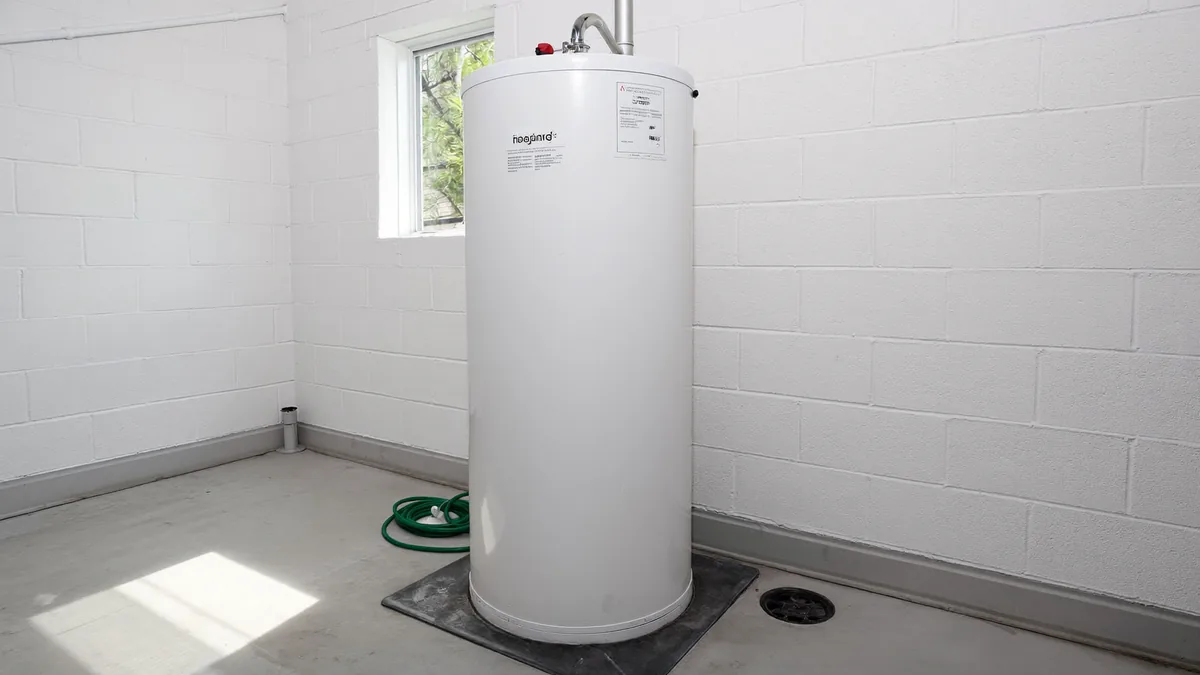
Learning how to flush a water heater takes a few steps: turn off the power or gas, shut the cold water supply, attach a hose to the drain valve, and drain the tank until the water runs clear. Flushing clears the sediment that settles in the tank. Many manufacturers recommend flushing at least once a year; check your manual.
What sediment is and why it builds up
Water carries dissolved minerals, mostly calcium and magnesium. When water is heated, some of those minerals come out of solution and settle as particles, which is why hard water tends to leave more sediment. Rust flakes from the tank lining and small debris from the water supply also collect on the bottom.
Sediment matters because it sits between the heat source and the water. On a gas unit the burner heats the tank bottom, and on an electric unit the lower element sits in the layer. A thick deposit makes the heater run longer to reach the set temperature, and it can cause popping or rumbling as water boils under the deposits. According to the U.S. Department of Energy, water heating is about 18% of a home's energy use, so a heater that works harder than it needs to costs you money.
Safety first
Safety first: Hot water can scald. The Consumer Product Safety Commission (CPSC) recommends setting water heaters to 120°F. Third-degree burns can occur after about 2 seconds at 150°F, 6 seconds at 140°F, and 30 seconds at 130°F, and they can occur after 5 minutes at 120°F. Let the water cool before you open the drain, and keep children and pets away from the hose and the tank.
If you smell gas, leave the home right away and call the gas utility or 911 from outside. Do not operate switches or try to relight a burner. On electric units, turn off the breaker for the heater, then confirm there is no power with a non-contact voltage tester before you touch any wiring or terminals.
Tools and supplies you will need
- A garden hose rated for hot water, long enough to reach a floor drain or the outdoors
- A bucket for checking water clarity during the flush
- A flat-blade screwdriver or adjustable pliers, in case the drain valve needs a little help
- A non-contact voltage tester for electric units
- Towels or rags, and a flashlight to see the valve and fittings
How to flush a water heater step by step
A flush and a full drain use the same steps. In a flush, you empty the tank, let cold water in briefly to stir the sediment, and drain again. The order matters because the tank must refill completely before you restore power or gas.
- Turn the controls off. On a gas unit, set the gas control to the pilot or off position as your manual describes. On an electric unit, switch off the heater's breaker and verify there is no power.
- Let the water cool before you open anything. Hot water in the tank stays hot for a long time after shutdown.
- Turn off the cold water supply valve on the inlet pipe at the top of the tank.
- Open a hot water faucet elsewhere in the house, such as a bathroom sink. This lets air into the system so the tank drains properly.
- Attach the hose to the drain valve near the bottom of the tank. Run the other end to a floor drain or outside, keeping it lower than the valve so water flows by gravity.
- Open the drain valve slowly by hand or with a screwdriver. Let the tank empty. Sediment often comes out in bursts, and the first water may be dirty.
- To stir up the remaining sediment, open the cold supply briefly while the drain is still open, then shut the cold supply again. Let the water run into your bucket until it looks clear. Repeat as needed.
- Close the drain valve and remove the hose. Open the cold supply valve and let the tank fill.
- Watch the open hot faucet. When water flows steadily without sputtering, the tank is full and the air is out. Close the faucet.
- Check the drain valve and fittings for drips. Then restore power or gas. On electric units, turn the breaker back on only after the tank is full. On gas units, relight the burner according to the label or manual, and confirm the thermostat setting.
What sediment looks like
The color and texture of the sediment give you clues about what is building up in the tank.
- Fine white or chalky grit usually means mineral scale from hard water.
- Brown or black flakes often point to rust from the inside of the tank.
- Sand-like particles or small pebbles are usually debris that came in with the water supply.
- Rusty water that keeps returning after several flushes can suggest ongoing corrosion, which a flush cannot fix.
Water should run clear before you refill the tank. If it stays cloudy or brown after several cycles, stop and check the drain valve, the tank's condition, and your manual before you repeat the process.
What to do when the drain valve is stuck or clogged
Drain valves cause trouble most often when a tank has not been drained for years. Work slowly and avoid forcing the valve.
- Confirm the cold supply is off and the hose end is lower than the valve.
- Open a hot faucet upstairs or elsewhere to let air in. Without air, water may not flow, and the valve can seem to stall.
- Open the valve a little and wait. Sediment can clog the seat, so gently tap the valve body or work the handle back and forth to dislodge debris.
- If the valve still will not open, stop. Excess force can crack a plastic body or damage the brass threads.
- If the valve leaks at the threads or stays partly closed after repeated attempts, stop and move to the professional section below.
Common mistakes make these problems worse. Opening the drain before the cold supply is shut off keeps refilling the tank. Leaving the drain valve open when you refill can flood the floor. Resting the hose end in standing water can cause backflow into the bucket.
Keep the relief valve and its discharge pipe in working order
Never cap, plug, or remove the temperature and pressure (T&P) relief valve. The discharge pipe is a safety path that lets the tank release pressure and heat when needed.
The International Plumbing Code (section 504.6) and the International Residential Code (section P2804.6.1), 2021 editions, as summarized by the International Code Council, set common rules for the discharge pipe:
- No direct connection to the drainage system. The pipe ends in an air gap in the same room.
- The pipe is not smaller than the valve outlet, and it has no threaded end, valves, or tees.
- The pipe is not trapped and drains by gravity.
- The end sits no more than 6 inches above the floor or a waste receptor.
- The pipe and its fittings are rated for 100 psi at 180°F.
Codes vary by state and city, so check with your local building department before you change any piping.
How often should you flush a water heater?
The right interval comes from the manufacturer's manual for your unit. Many manufacturers recommend flushing at least once a year, and the manual may also list inspection intervals for the anode rod and descaling. Hard water, heavy sediment, and a tank that has never been flushed are reasons to check more closely than the minimum schedule suggests.
Some signs mean you should flush sooner rather than later:
- Rumbling or popping while the tank heats
- Slower recovery of hot water at the taps
- Gritty or discolored water that does not clear after running the tap
- Heating that takes noticeably longer than it used to
According to the U.S. Department of Energy, most storage (tank) water heaters last 10 to 15 years, while tankless water heaters can last more than 20 years. Flushing helps a tank perform well through its service life, but it cannot reverse a corroded or failing tank.
Keeping sediment and bacteria under control
- Set the thermostat to 120°F. The U.S. Department of Energy calls this a temperature considered safe for most of the population.
- People with a compromised immune system or chronic respiratory disease may want to keep the tank at 140°F. In that case, a tempering (mixing) valve set to 120°F downstream of the tank lets the tank run hotter without scald risk at the tap.
- The Department of Energy's Federal Energy Management Program (FEMP) notes that Legionella can grow in water heaters under certain conditions, so temperature control and regular maintenance both matter.
- Follow your manual's schedule for inspecting the anode rod, which helps protect the tank from corrosion.
- Write down each flush with the date and what the water looked like. Patterns in the notes will show you how often your unit really needs attention.
When to call a professional
Some problems go beyond a flush. Call a licensed plumber or water heater installer if any of these apply:
- The drain valve leaks, will not close, or will not open after the steps above.
- The tank leaks from a seam, the base, or a fitting.
- The relief valve discharges continuously or drips without stopping.
- The water stays brown or gritty after repeated flushes.
- You are weighing a replacement for a tank that is near the end of its typical life.
When you hire someone, get at least two written quotes. Check the contractor's license with your state licensing board where licensing applies, ask who pulls the permits, and ask what the price includes, such as haul-away of the old tank, any code upgrades, and warranty registration.
Frequently asked questions
Do I need to empty the whole tank to flush it?
Yes. A flush uses the same drain valve and hose as a full drain. You empty the tank, briefly let cold water in to stir the sediment, then drain again until the water runs clear. Stopping early leaves sediment in the bottom, so repeat the cycle as needed.
What temperature should my water heater be set to?
According to the U.S. Department of Energy, 120°F is a temperature considered safe for most of the population. People with a compromised immune system or chronic respiratory disease may want to keep the tank at 140°F, and a tempering valve set to 120°F downstream of the tank lets the tank run hotter without scald risk at the tap. Set the temperature before you flush and check it again after the tank refills.
Why does my water heater pop or rumble?
This usually means water is boiling under a layer of sediment at the bottom of the tank. The deposit traps heat, and the water beneath it forms bubbles that burst as they rise. Flushing often reduces the noise. If it continues after a thorough flush, have the unit checked.
What should I do if the water is still cloudy after flushing?
Keep draining and refilling until the water in your bucket runs clear. If it stays cloudy, brown, or gritty after several cycles, the problem may be rust or corrosion inside the tank rather than loose sediment. Check the tank's condition and your manual's guidance on the anode rod, and talk with a pro if the discoloration continues.
How long do water heaters last?
According to the U.S. Department of Energy, most storage (tank) water heaters last 10 to 15 years, while tankless water heaters can last more than 20 years. Regular flushing supports a tank through its service life, but it cannot restore a tank that is corroded or leaking. If your unit is near the upper end of its range and shows leaks or heavy rust, compare the cost of repair with replacement.