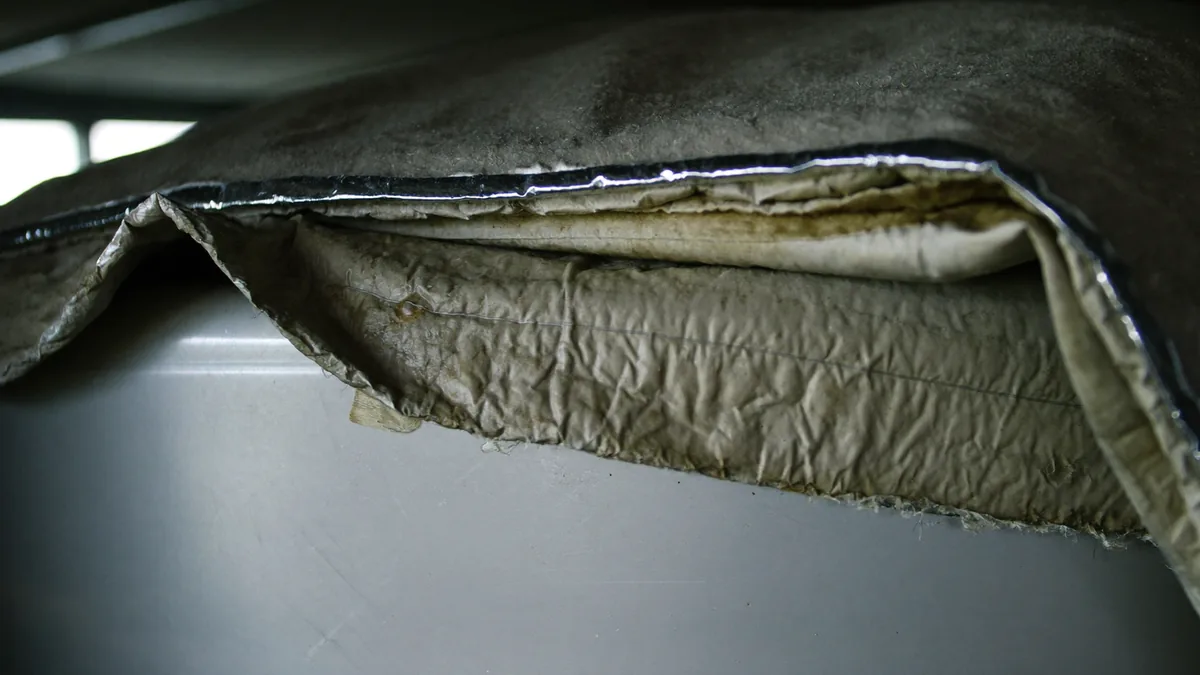
A water heater blanket still helps some tanks, mainly older units with thin factory insulation, by slowing heat loss through the tank walls. Newer tanks already have thick insulation, so a blanket adds much less. Read the label and manual before you wrap, and keep controls, vents and the relief valve uncovered.
How a water heater blanket reduces standby heat loss
A storage tank keeps its full volume hot all day, even when nobody runs a tap. Heat escapes through the walls, and the burner or heating elements switch on to replace it. That steady loss is called standby heat loss.
According to the U.S. Department of Energy, water heating is about 18% of a home's energy use, so standby loss is part of a real share of that cost. A blanket adds a layer of insulation over the outside of the tank. It does not change how much hot water the tank holds or how fast it recovers.
Older tanks versus newer tanks
According to the DOE, most storage tanks last 10 to 15 years. Older tanks often have thinner factory insulation, and the outer jacket may feel noticeably warm when you touch it. That is where a blanket can pay off.
Tankless units are a different case. According to the DOE, they can last more than 20 years, and they heat water on demand instead of storing it. A storage-tank blanket is not the right tool for a tankless unit.
Signs an older tank may benefit
- The tank is within or near its typical 10 to 15 year life and the outer jacket feels warm.
- The jacket is thin, and the foam layer is hard to see or feels sparse.
- The water heater sits in an unheated garage, basement or crawlspace where room air stays cool.
- The blanket is sold for your tank's size and type, and your manual does not prohibit it.
Why newer tanks gain less
Most newer tanks have a thick layer of foam inside the jacket, so the outer surface stays only mildly warm. A blanket has less heat to hold back, and the savings are usually small. Check the existing insulation and the manufacturer's guidance before you buy.
How to check the R-value before you buy or install
R-value measures how well a material resists heat flow. A higher R-value means more resistance, but the number only matters when you compare it with what the tank already has and what the manufacturer allows.
- Look for the insulation information on the tank's label and in the owner's manual. Some labels list the insulation type or rating, and some do not.
- Read the R-value printed on the blanket packaging. Confirm it is a rating for the blanket itself, not a general claim.
- Remember that the blanket stacks on top of the factory layer. The combined resistance is what counts, so a blanket adds less to a tank that is already well insulated.
- Check the manual for any rule about blankets. Some manufacturers advise against them or limit them to certain models, and that guidance overrides a general rule.
- After installation, feel the outer surface again. It should be warmer than the room but not hot to the touch, and the blanket should not trap heat around the controls or vent.
A high R-value does not make a blanket safe on a unit that the manufacturer says to leave uncovered. Fit and clearance come first.
Where not to cover on gas and electric units
A blanket belongs on the tank body only. Several areas need open access for combustion, ventilation, service and safety, and some of them sit close to the tank's surface.
Gas units
- The burner compartment and any door or panel over it.
- The flue, draft hood and vent connection at the top. Blocking them can send combustion gases into the home.
- Combustion air openings at the bottom or sides of the unit.
- The gas control valve, thermostat dial and pilot or ignition access.
- The drain valve at the bottom, so you can flush the tank.
The CPSC recommends carbon monoxide alarms on every level of the home and outside sleeping areas. An alarm is a useful backup, but it does not replace keeping vents and air openings clear.
Electric units
- The access panels for the upper and lower heating elements.
- The upper and lower thermostats behind their covers.
- Wiring and junction boxes on the top of the tank.
- Any nameplate or label you may need to read during service.
Cut the blanket around these openings rather than over them. Leave enough room that the panels can come off later without tearing the blanket apart.
Relief valve and discharge pipe rules
The temperature and pressure relief valve is the safety outlet if the tank overheats or builds too much pressure. Never cap, plug or wrap it, and keep the blanket clear of its discharge pipe.
The International Plumbing Code and International Residential Code (2021 editions, as summarized by the International Code Council) set the discharge pipe requirements. Check with your local building department to see how your area applies them. The summary includes these points:
- The discharge pipe is not directly connected to the drainage system.
- It ends in an air gap in the same room.
- The pipe is not smaller than the valve outlet, is not trapped, and drains by gravity.
- The outlet ends no more than 6 inches above the floor or a waste receptor.
- The pipe has no threaded end, and it contains no valves or tees.
- The valve is rated for 100 psi at 180°F.
What the manufacturer's label and manual tell you first
- Find the label on the jacket and note the model and serial number, which you will need to check the tank's age and specifications.
- Look for wording such as keep clear, do not cover, or clearance requirements near the controls, vent or burner area.
- Check whether the warranty mentions insulation covers or aftermarket additions.
- Note the recommended maintenance. Many manufacturers recommend flushing at least once a year, but the manual's schedule is the one to follow.
- Review the shutdown and restart steps before you touch any controls.
Setting the temperature before you wrap the tank
Set the thermostat to 120°F. According to the DOE, that temperature is considered safe for most of the population. The CPSC notes that third-degree burns can occur after about 2 seconds at 150°F, about 6 seconds at 140°F, about 30 seconds at 130°F, and even after 5 minutes at 120°F.
According to the DOE, people with a compromised immune system or chronic respiratory disease may want to keep the tank at 140°F. In that case, a tempering (mixing) valve set to 120°F downstream of the tank lets the water stay hot enough to limit Legionella growth without raising the scald risk at the tap. The DOE notes that Legionella can grow in water heaters under certain conditions.
Step-by-step: wrapping a tank safely
Safety first: On electric units, turn off the breaker and confirm with a voltage tester that the circuit is dead before you open any panel. On gas units, if you smell gas, leave the home and call the gas utility or 911 from outside. Do not switch lights or appliances on or off while you investigate.
- Set the controls to off or pilot following the manual, and let the water cool before you handle the tank or the valves.
- Lay out the blanket and mark the openings for the controls, thermostats, drain valve, vent connection and any nameplate.
- Cut the openings before you wrap, using a utility knife on the blanket only.
- Wrap the tank body and keep the blanket away from the burner area, controls, vent and relief valve.
- Secure the blanket with the straps or tape the packaging specifies. Avoid tape over any opening or access point.
- Restore power or gas according to the manual and confirm the thermostat is set correctly.
- Check the tank a day later for scorch marks, soot, a warm vent, or water near the base, and make sure the relief valve pipe is clear.
When a blanket will not fix the problem
A blanket cannot repair a failing tank. If you see water pooling at the base, rust at seams, a leak from the relief valve, or a rumbling noise from sediment, the tank needs inspection rather than extra wrapping. A blanket can also hide these signs, so look under it periodically.
Slow recovery and a tank that is close to the end of its typical life are better reasons to plan a replacement. Insulation saves energy on a sound tank. It does not extend the life of a tired one.
Keeping heat loss and maintenance in check
- Keep the thermostat at 120°F unless a health condition calls for a higher setting.
- Flush the tank on the schedule in your manual, which many manufacturers set at least once a year.
- Inspect the blanket and the tank every few months for shifting, moisture or pest damage.
- Keep the area around the tank clear so vents and combustion air openings stay open.
Finding a qualified pro for larger work
If your tank needs repairs or replacement, get at least two written quotes so you can compare scope and price. Check the contractor's license with your state licensing board where licensing applies. Ask whether permits are required, who pulls them, and what the quote includes, such as haul-away, code upgrades and warranty registration.
Frequently asked questions
Does a water heater blanket still help a newer tank?
Usually very little. Most newer storage tanks already have thick factory foam, so the outer shell stays only mildly warm and a blanket has less to add. Check the existing insulation and the manufacturer's guidance before you buy. If the tank is still well insulated, lowering the set temperature to 120°F is often the more useful step.
Can I cover a gas water heater with a blanket?
Sometimes, and only on the tank body if the manual allows it. Keep the burner compartment, draft hood, flue, vent connection, combustion air openings, gas control and drain valve uncovered. Blocking combustion air or venting can be dangerous. The CPSC recommends carbon monoxide alarms on every level of the home and outside sleeping areas.
What if the relief valve is hard to reach under the blanket?
Leave it uncovered and cut an opening around it. Never cap or plug a temperature and pressure relief valve, and do not wrap its discharge pipe. The pipe should drain by gravity, end in an air gap in the same room, and stay no more than 6 inches above the floor or a waste receptor. Check with your local building department about how your area applies these rules.
What temperature should I set the tank to after wrapping it?
Set it to 120°F. The DOE considers that temperature safe for most of the population, and the CPSC notes that third-degree burns can occur after about 5 minutes at 120°F. If someone in the home has a compromised immune system or chronic respiratory disease, the DOE says they may want 140°F, and a tempering valve can then protect against scalding at the tap.
How do I know if my tank is too old for a blanket?
Find the manufacture date or serial number on the label to estimate the age. According to the DOE, most storage tanks last 10 to 15 years. If your tank is near or past that range, leaks, rust at the seams, rumbling or slow recovery are better reasons to plan a replacement than an insulation blanket. Have a licensed plumber evaluate it before you decide.