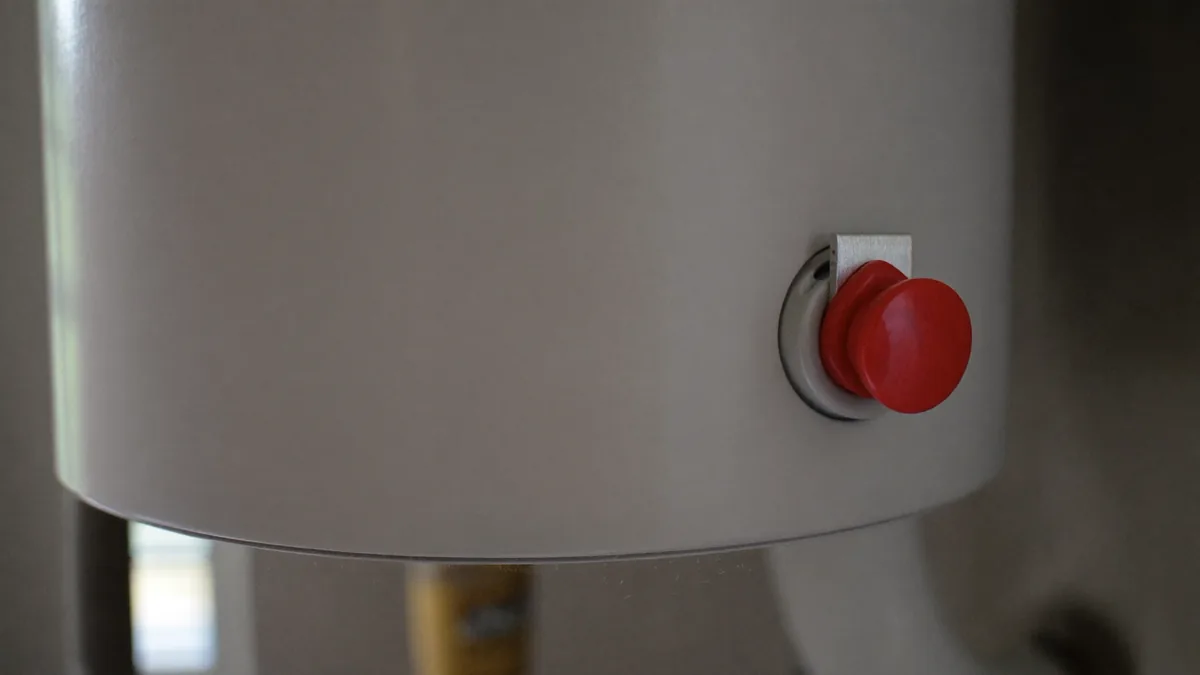
A water heater reset button that keeps tripping usually means the high-limit switch (ECO) has cut power to a heating element. That happens when water overheats or when the element or its wiring is faulty. Pressing the button again without finding the cause hides a real problem, so repeated tripping deserves attention.
What the water heater reset button does on an electric unit
Most electric storage water heaters have two heating elements, an upper and a lower, and each one is controlled by a thermostat. Behind the upper access panel, under an insulating cover, sits a high-limit switch with a red reset button. It is a safety device that opens the circuit and stops current from reaching the element when the water gets hotter than the controls should allow.
The high-limit switch is not your everyday temperature control. Your thermostat dial does that job. The high-limit switch only acts when something has already gone wrong, so a trip is a symptom you should investigate rather than a routine event.
Why the high-limit switch trips
A failed upper thermostat
If the thermostat contacts stick in the closed position, the element keeps heating after the water reaches the setting. The water climbs until the high-limit switch cuts power. From the outside, the unit may look normal, and the trips may only happen after heavy use or during a period when the tank refills.
A shorted or failing element
A heating element can develop a short to the metal tank. Mineral scale and sediment can build up around the element and cause it to run hotter than designed, and over time the sheath can wear through. Current leaking to ground can trip the high-limit switch, and in some cases the breaker as well.
Loose or corroded wiring
The connections at the element terminals and at the thermostat can loosen or corrode. A loose connection adds resistance, which creates heat at the terminal and in the nearby switch. Discolored wire insulation, brittle or melted plastic, or a burnt smell at the access panel all point to this kind of fault.
Low water in the tank
If the tank is not full, an element can sit uncovered and overheat. This can happen after draining the tank for maintenance and forgetting to refill it before restoring power. Check that the tank is full before you suspect a failed part.
Why the breaker can trip instead
The breaker protects the circuit from overcurrent and from ground faults. If an element has a ground fault or a wire is shorted, the breaker may trip before the high-limit switch does. A breaker that trips and stays tripped is a stronger sign of a short in the circuit than of a simply overheated tank.
Compare the breaker rating with the nameplate on the water heater. A replacement breaker should match the rating the nameplate specifies. A mismatched or undersized breaker can trip without any fault in the unit, but do not assume that is the cause until you have checked the nameplate and the wiring.
Why repeated tripping is a warning sign
A single trip after a power interruption may not mean much. Repeated trips mean a fault is still present and the protective devices are doing their job. Each cycle puts stress on the wiring, the switch, and the element.
Resetting over and over can let a damaged connection keep heating or allow a leaking element to keep running. If you see water pooling around the base of the tank, or water coming from the element area, stop resetting the unit and shut off the power at the breaker.
What you can check safely
Safety first: Electrical work can cause shock and burns. Turn off the breaker for the water heater, then verify that power is off with a non-contact voltage tester at the terminals before you remove any cover. Keep your hands and the floor dry, and never open the element cover while the unit is powered.
- Check the thermostat dial on the lower and upper panels. Confirm the setting is 120°F, which the U.S. Department of Energy (DOE) considers a temperature safe for most of the population.
- Note the pattern of the trips. Write down whether the button trips right after you reset it, during heavy hot water use, or after the tank has been drained or serviced.
- Look at the breaker panel. A breaker in the middle or off position has tripped. Switch it fully off, then back on once. If it trips again right away, stop and do not keep resetting it.
- Turn off the breaker for the water heater and verify power is off with your tester.
- Remove the upper access panel and insulation. Look for burnt or discolored wire, melted insulation, and loose wire nuts or terminal screws.
- Tighten a loose terminal screw only if the connection is clearly visible and the wire is undamaged. Do not splice, cut, or add new wire to fix a burned section.
- Test the elements for a short to ground only if you have a multimeter and know how to use it safely. Many homeowners hand this step to an electrician because a meter reading that looks normal does not always rule out a fault.
- Restore power, let the water heat, and press the high-limit reset once after the fix. If it trips again, stop and call a professional.
When to call a professional
- The reset button trips again right after you press it, even after you have checked the wiring.
- The breaker trips repeatedly or will not stay on.
- You see scorching, melted plastic, or a burnt smell at the access panel or the breaker.
- The thermostat, high-limit switch, or element looks damaged or needs replacement.
- Water drips from the temperature and pressure relief valve. Do not cap or plug that valve. Its discharge pipe must end in an air gap in the same room, no more than 6 inches above the floor or a waste receptor, and must not be trapped, valved, or threaded.
- You are not comfortable working inside the wiring or you do not own a voltage tester.
Preventing repeated tripping
Set the thermostat to 120°F. The DOE recommends this setting, and the Consumer Product Safety Commission (CPSC) also recommends 120°F for water heaters. At 150°F, third-degree burns can occur after about 2 seconds, and at 140°F after about 6 seconds. Even at 120°F, third-degree burns can occur after about 5 minutes, so check the temperature at a tap before bathing children or older adults.
The DOE notes that people with a compromised immune system or chronic respiratory disease may want to keep the setting at 140°F. If that applies in your home, talk with a doctor about the tradeoff before you change the setting, and make sure everyone who uses hot water understands the burn risk.
- Flush sediment from the tank according to the manufacturer's instructions, so the elements are not buried in buildup.
- Keep the tank full before restoring power after any drain or service.
- Check the wiring and the access panel during routine maintenance, looking for discoloration or loose terminals.
- Note the age of the unit. According to the DOE, most storage (tank) water heaters last 10 to 15 years. If yours is near that range and trips keep returning, replacement may be more practical than repeated repairs.
Finding a pro for the repair
Get at least two written quotes that name the part to be replaced, such as the thermostat, high-limit switch, or element, and list any wiring work. Check the contractor's license with your state licensing board where licensing applies. Ask whether permits are needed and who will pull them, because requirements vary, so check with your local building department. Ask what is included, such as haul-away of the old unit, any code upgrades, and warranty registration.
Frequently asked questions
Is it safe to keep pressing the water heater reset button?
Pressing it once after a fault has been checked is reasonable. Pressing it repeatedly without finding the cause is not. Each trip means the high-limit switch detected an unsafe condition, and continued resets can keep a damaged connection heating or let a leaking element keep running. If the button trips again right away, stop and have the unit inspected.
What is the difference between the high-limit switch and the thermostat?
The thermostat controls the normal water temperature by switching the element on and off. The high-limit switch is a backup that cuts power only when the water gets too hot, which usually means the thermostat has failed or something else is wrong. The reset button belongs to the high-limit switch, so a trip tells you a safety limit was reached.
Why does the breaker trip instead of the reset button?
The breaker responds to overcurrent and ground faults in the circuit, while the high-limit switch responds to heat. A breaker trip often points to a short or ground fault in the element or its wiring. If the breaker trips and will not hold, treat it as an electrical fault and stop resetting it until someone has checked the circuit.
Can I replace the high-limit switch myself?
Replacing the switch means working inside the wiring of the unit, where shock and burns are possible. Many homeowners choose to have an electrician do the job, especially if the wiring or elements also need attention. If you decide to do it yourself, verify the power is off, match the replacement to the unit's nameplate, and check whether a permit is required where you live.
How long should an electric water heater last?
According to the U.S. Department of Energy, most storage (tank) water heaters last 10 to 15 years. Tankless water heaters can last more than 20 years. Repeated high-limit trips in an older tank may be a sign that the unit is wearing out, so compare the cost of repairs with the cost of a new unit before you decide.