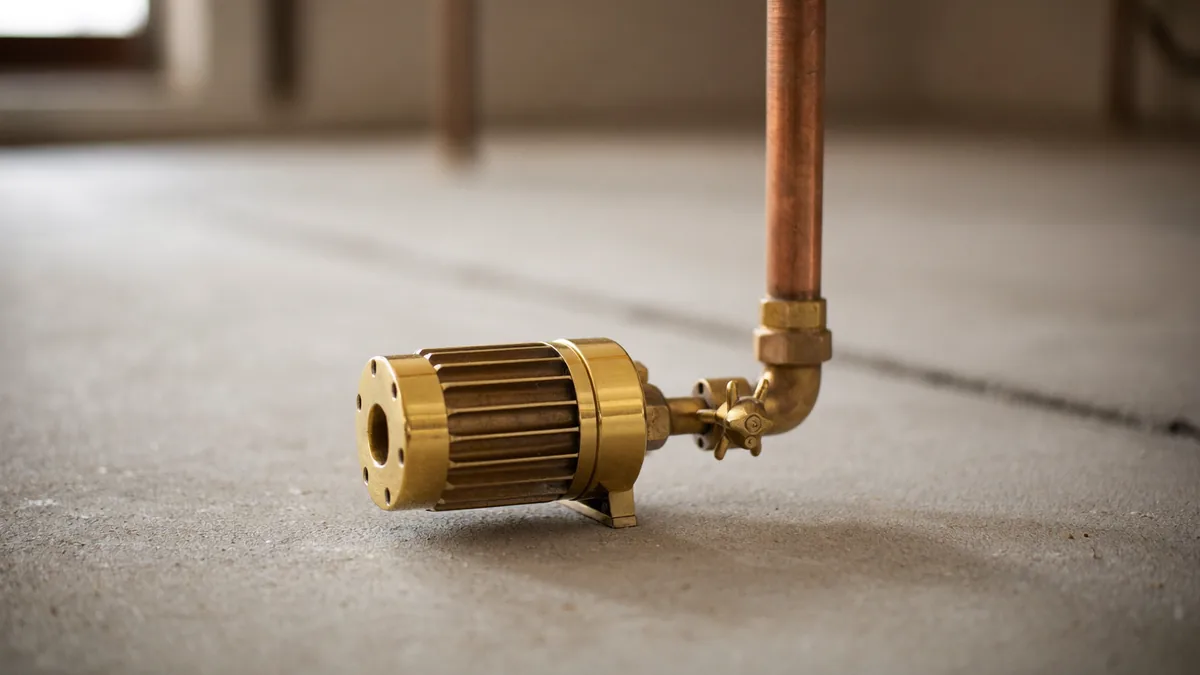
A hot water recirculation pump moves hot water from the water heater through a loop to the fixtures farthest away, so the tap delivers hot water without a long wait. It can use a dedicated return line or the existing cold line. You can run it continuously, on a timer, or on demand, and each choice trades convenience for energy use.
What a hot water recirculation pump does
Hot water has to travel through the pipes before it reaches a faucet. If the fixture sits far from the heater, the water in the pipe cools between uses, and you run the tap until hot water arrives. A recirculation pump keeps water moving in a loop so hot water is already waiting near the fixture.
Most pumps are small and sit near the water heater, under a sink, or on the return line. Some models include a temperature sensor that shuts the pump off once the loop is hot. A pump saves time and reduces wasted water at the tap, but it does not make the heater produce more hot water.
Dedicated return line vs crossover valve systems
Recirculation systems generally follow one of two designs. The right one depends on how your plumbing is laid out, and both move water back toward the heater through different pipes.
Dedicated return line
A dedicated return line is a separate pipe that runs from the farthest hot water fixture back to the water heater or the pump. The pump pushes water through the hot supply and back through this return, keeping the whole loop warm. The cold line stays cold, so this design gives the cleanest result.
The trade-off is installation work. Running a new pipe through finished walls, floors, or ceilings is often the most involved part of the project, and it may not be practical in an existing house. This design fits best during a remodel or new construction.
Crossover valve systems
A crossover system uses the existing cold water line as the return path. A valve or small pump at the farthest hot fixture connects the hot line to the cold line, so cooled water in the hot pipe is pushed back through the cold pipe toward the heater. Because it reuses existing pipes, it is often the easier retrofit.
Crossover systems have a side effect. The cold line briefly carries warm water during each cycle, so cold taps near the connection point may feel slightly warm for a moment. Ask the installer how the system prevents hot water from flowing backward into the cold supply, and confirm that local rules allow this arrangement.
Timers, on-demand controls and continuous operation
How the pump runs matters as much as how the pipes are arranged. Most systems use one of three control methods, and each one trades a shorter wait against wasted heat.
- Continuous operation: The pump runs all day and night. Hot water is always close to the fixtures, but the loop keeps losing heat through the pipe walls, so this method uses the most energy.
- Timer control: The pump runs during set hours, such as the morning and evening when people shower and cook. It is simple to set and matches predictable routines, though the wait may be longer outside those windows.
- On-demand control: A push button at the fixture or a motion sensor starts a short cycle when you need hot water. It uses the least energy during quiet periods, but you wait a moment after you activate it.
Many homes combine methods, such as a timer for the day and on-demand operation overnight. Choose a control that makes the schedule easy to change, because a timer set to the wrong hours either wastes energy or leaves you waiting.
Energy trade-offs you should expect
A recirculation pump uses electricity to move water, and the loop itself loses heat along the way. According to the U.S. Department of Energy, water heating is about 18% of a home's energy use, so anything that adds heat loss deserves a close look. The real question is whether the time saved at the tap is worth the added energy in your household.
Efficiency ratings such as the Uniform Energy Factor (UEF) describe the water heater itself under the federal test procedure. They do not capture the losses added by a loop, so a efficient heater can still lose energy through long, bare pipe runs. The table below compares the control options in general terms.
| Control | Wait at the tap | Energy use | Best fit |
|---|---|---|---|
| Continuous | Shortest | Highest | Steady, heavy use or a very long loop |
| Timer | Short during scheduled hours | Moderate | Predictable daily routines |
| On-demand | Brief pause after activating | Lowest | Occasional use or smaller households |
Insulating exposed hot water pipes reduces heat loss along the run. A short, well-insulated loop can make a pump far more reasonable than a long, bare one.
Compatibility with tankless water heaters
A tankless water heater heats water as it flows and does not keep a reservoir to draw from. Its capacity is described by Maximum GPM, the maximum gallons per minute of hot water it can supply under the federal test procedure. A recirculation loop can cause the unit to fire repeatedly with small flows, so compatibility is not automatic.
Some tankless units are designed to work with recirculation and include controls or a dedicated loop kit. Others may cycle on and off with the small flow a pump creates, which wastes energy and adds wear. Read the manufacturer's installation manual before buying a pump, and do not assume it can simply be added to the pipe.
Service life also matters. According to the U.S. Department of Energy, most storage water heaters last 10 to 15 years, while tankless water heaters can last more than 20 years. If your heater is near the end of its life, adding a loop may mean paying for two projects in a short time, so plan both together.
Temperature, scalding and Legionella
The U.S. Department of Energy describes 120°F as a temperature considered safe for most of the population. People with a compromised immune system or chronic respiratory disease may want to keep the heater at 140°F, so set the temperature with your household's needs in mind. A loop keeps water sitting in pipes between uses, which makes the setting matter more.
Legionella bacteria can grow in water heaters under certain conditions. DOE recommends a tempering (mixing) valve set to 120°F downstream of storage tanks. A recirculation pump does not replace that valve, so review how your system is plumbed before adding a loop.
What a pump can and cannot fix
A pump shortens the wait for hot water that already exists in the system. It does not change the heater's output. A storage heater's First-Hour Rating is the estimate of the maximum volume of hot water it can supply within an hour, starting fully heated, and a loop does not raise that number.
Fixture flow rates also affect how the water feels. According to DOE (10 CFR 430.32), federal maximum flow rates are 2.5 gallons per minute at 80 psi for showerheads and 2.2 gallons per minute at 60 psi for lavatory and kitchen faucets. A pump makes the wait shorter at those flows, but it cannot make a weak supply or a small heater deliver more water.
Steps to check your plumbing before adding a pump
Safety first: Before you touch the pump or its wiring, turn off the breaker that feeds it and confirm the power is off with a tester. Hot water can scald quickly. The U.S. Consumer Product Safety Commission (CPSC) recommends setting water heaters to 120°F, and third-degree burns can occur after about 2 seconds at 150°F, 6 seconds at 140°F, 30 seconds at 130°F, and after 5 minutes at 120°F.
- Map the hot water path from the heater to the farthest fixture, noting pipe material, length, and whether the pipe is insulated.
- Check whether a return line already exists. Some homes have one, and a pump can connect to it without new piping.
- Confirm the heater's temperature setting. Test the water at a faucet with a thermometer rather than relying on the dial alone.
- Note the heater type and size, including the First-Hour Rating for a storage unit, and compare it with how your household uses hot water.
- For a tankless unit, read the manual and confirm recirculation compatibility before buying anything.
- Choose a control method that fits your daily routine, and confirm the controls can be adjusted later.
- Ask for written quotes that describe the pipe route, the pump, the controls, and the electrical work.
When to call a professional
Some recirculation work is simple, such as swapping a timer on an existing pump. Other jobs involve cutting into walls, adding new wiring, changing water heater connections, or altering a tankless unit's water supply or venting. Those projects call for a licensed plumber or electrician, and you should expect a written scope before work starts.
When you compare contractors, get at least two written quotes that describe the same work. Check the contractor's license with the state licensing board where licensing applies, and ask who pulls permits. Ask your local building department which permits apply to your project. Also ask what is included, such as haul-away of old parts, any required code upgrades, and warranty registration for the pump.
Preventing long waits and wasted water
Before adding a loop, look for ways to shorten the distance hot water travels. Insulating exposed hot water pipes limits heat loss along the run, and it helps any loop you add later. Fixing dripping faucets also matters, since a drip is heated water sent straight down the drain.
Layout decisions make a lasting difference. Placing a new fixture on a shorter branch, or planning bathrooms and kitchens closer to the water heater during a remodel, can shorten the wait more than any control setting. Those choices shape the wait at every tap in the house.
Frequently asked questions
Can a hot water recirculation pump work with a tankless water heater?
Sometimes. A tankless unit heats water on demand and has a Maximum GPM rating, so the loop must be matched to the unit. Some models are designed for recirculation and include controls or a dedicated kit, while others can cycle on and off with small flows and waste energy. Read the manufacturer's manual and confirm compatibility before you buy a pump or plan the loop.
Should I run the pump all the time or on a timer?
For many households, a timer or on-demand control uses less energy than continuous operation while still providing hot water when you need it. Continuous running gives the shortest wait but keeps losing heat through the pipes. If your schedule is predictable, set the timer to cover morning and evening use. If you need hot water only occasionally, on-demand control is often the better fit.
Does a crossover valve system affect the cold water at my faucets?
It can. Because the cold line temporarily carries warm water during a cycle, nearby cold taps may feel slightly warm for a short time. A well-designed system uses check valves and correct placement to limit this. The installer should explain how the system prevents backflow, and if the cold water warms often, ask whether a dedicated return line or a different control would suit the home better.
Will a recirculation pump help if my water heater is too small?
Not really. A pump moves hot water the heater has already produced. A storage heater's First-Hour Rating estimates how much hot water it can supply within an hour, and a loop does not raise that figure. If you run out of hot water during showers, the heater's capacity or your household's demand is the real issue, so compare the rating with your usage before adding a loop.
Why do I still wait at one faucet after installing a pump?
Several factors can explain it. The timer may be off during the hours you need water, the on-demand button may be far from that fixture, or the pipe to that faucet may branch off the loop and stay cool. Check the control settings, confirm the pump is running, and ask the installer to trace the pipe layout to see whether that fixture is connected to the loop.