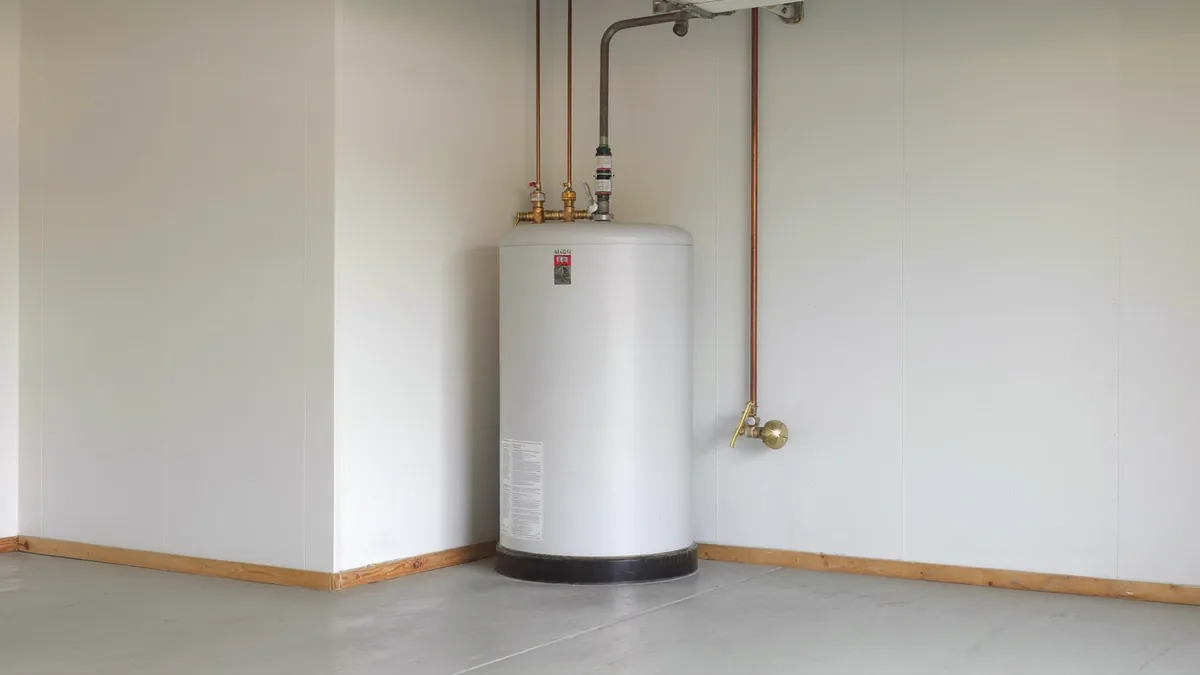
For most homeowners, the right gas vs electric water heater depends on the fuel your home has, how much hot water you use at peak times, and whether you have space and a venting path. Gas units usually recover faster and avoid electrical upgrades, while electric heat pump models are the most efficient option if you have room for them.
Gas vs Electric Water Heater: The Core Differences
Both types heat water and deliver it on demand from a storage tank or a tankless coil. The real differences come down to the energy source, how efficiently that energy becomes hot water, and what your home must provide to support the unit. According to the U.S. Department of Energy (DOE), water heating is about 18% of a home's energy use, so the choice affects your utility bills for years.
Efficiency is measured by the Uniform Energy Factor (UEF), defined in the federal test procedure as the measure of a water heater's overall efficiency. Higher is better. The ENERGY STAR minimums below show how much efficiency varies by design.
| Water heater | ENERGY STAR minimum UEF |
|---|---|
| Integrated heat pump (electric) | 3.30 |
| Split-system or 120-volt heat pump (electric) | 2.20 |
| Gas storage, over 20 and up to 55 gallons | 0.81 (medium draw) or 0.86 (high draw) |
| Gas storage, over 55 gallons | 0.86 |
| Gas tankless | 0.95 |
These figures are minimums, not typical results. A unit that exceeds its minimum will use less energy to heat the same amount of water.
Lifespan also matters when you compare. According to the DOE, most storage (tank) water heaters last 10 to 15 years, while tankless water heaters can last more than 20 years. Plan for a replacement cycle, not just the purchase price.
Fuel Availability and Hookups
Start with what already reaches your home. A gas unit needs a gas supply line of adequate size, a shutoff valve, and a flue. If your home has only electric service, switching to gas means adding new gas piping, venting, and combustion air, which can be costly and is not practical in every house.
An electric unit needs a dedicated circuit of the right capacity. A heat pump water heater also needs enough open air volume around it, usually a garage, basement or utility room, and it needs a place for condensate to drain. Some electric storage models can go in tight spaces where a gas unit cannot, because they have no flue.
Look at your utility options too. In some areas, natural gas is not available and propane is delivered by tank, which changes the operating cost picture. Your local fuel supplier and utility can tell you what is available at your address.
Operating Cost: How Efficiency and Fuel Prices Interact
Your annual water heating cost depends on two things: how much energy the unit uses to heat your water, and what that energy costs where you live. A more efficient unit uses less fuel or electricity for the same hot water, but a cheap fuel can still beat an expensive one. Compare your own utility rates rather than relying on national averages.
Heat pump water heaters move heat from the surrounding air into the water rather than creating heat directly, which is why their UEF minimums are much higher than gas storage. A gas tankless unit, with a minimum UEF of 0.95, is the most efficient gas option in the table, and it avoids the standby losses of a full tank.
Federal standards also shape future choices. DOE efficiency standards have applied since April 16, 2015. A DOE final rule published May 6, 2024 requires that, starting May 6, 2029, larger electric storage water heaters meet heat-pump-level efficiency. A new small electric storage class (20 to 35 gallons effective volume, low or very-small draw) can still use electric resistance elements. Gas, oil and larger electric storage heaters receive a moderate efficiency increase.
Recovery Rate: Will You Run Out of Hot Water?
Recovery rate describes how quickly a unit refills hot water after heavy use. For storage tanks, the key figure is the First-Hour Rating, which the federal test procedure (10 CFR 430, Appendix E) defines as an estimate of the maximum volume of hot water a storage water heater can supply within an hour, starting fully heated. For tankless units, the key figure is the Maximum GPM, the maximum gallons per minute of hot water the unit can supply.
Gas storage units generally recover faster than electric resistance tanks because burners heat water more quickly. Heat pump units heat more slowly and work best when the surrounding air is not too cold, so they often need a larger tank or a backup strategy in homes with heavy morning demand. Tankless units deliver steady hot water, but their flow drops when several fixtures run at once.
To size either type, follow these steps:
- List every fixture that runs hot water at the same time, such as two showers and a dishwasher.
- Estimate flow for each. Federal maximum flow rates for showerheads are 2.5 gallons per minute at 80 psi, and for lavatory and kitchen faucets 2.2 gallons per minute at 60 psi.
- Compare the total with the First-Hour Rating for a tank, or the Maximum GPM for a tankless unit.
- Choose a size or model that covers your busiest 30 to 60 minutes with a margin, not your average day.
Venting, Combustion Air and Carbon Monoxide
Gas water heaters burn fuel, so they must vent combustion gases outside. Standard atmospheric models rely on natural draft up a metal flue. Power-vent and direct-vent designs use a fan and may run through smaller pipe, and some high-efficiency models condense moisture that must drain away. Each design has its own venting rules, and a poor vent connection can release carbon monoxide into the home.
The Consumer Product Safety Commission (CPSC) recommends carbon monoxide alarms on every level of the home and outside sleeping areas. This applies to any home with combustion appliances, so check your alarms if you already have a gas unit or plan to install one.
Electric water heaters produce no combustion gases and need no flue. A heat pump model does move air, however, and it cools the space it draws from. Placing one in a small closet or an unheated space can change room temperatures and humidity, so check the clearances and airflow in the manufacturer's installation instructions before choosing a location.
Safety Considerations for Each Fuel
Safety first: If you smell gas near a gas water heater, leave the home right away and call the gas utility or 911 from outside. Do not turn lights or appliances on or off inside the home while you are leaving.
Scalding is a risk with either fuel. The DOE and CPSC both recommend setting the water heater to 120°F, which the DOE describes as a temperature considered safe for most of the population. According to the CPSC, third-degree burns can occur after about 2 seconds at 150°F, 6 seconds at 140°F, 30 seconds at 130°F, and can occur after 5 minutes at 120°F. People with a compromised immune system or chronic respiratory disease may want to keep the setting at 140°F, according to the DOE Energy Saver Guide, which means a tempering valve is especially important for them.
Legionella bacteria can grow in water heaters under certain conditions. The DOE's Federal Energy Management Program (FEMP) recommends a tempering (mixing) valve set to 120°F downstream of storage tanks. This applies to both gas and electric tanks, so a storage unit should be set up with the valve in place.
Switching Fuels: Gas to Electric or Electric to Gas
Changing fuels is a larger job than a like-for-like replacement, because the new unit needs different utilities and possibly different venting. Expect the work to include the following:
- Confirm utilities. A gas-to-electric change needs an electrical circuit of the right capacity and may need a panel review. An electric-to-gas change needs a gas line sized for the new appliance.
- Plan the venting. Removing a gas unit may let you remove its flue, but the new electric unit may need a new drain or clearance. An electric-to-gas change needs a new flue, combustion air, and carbon monoxide alarms on every level.
- Check space and drainage. A heat pump needs air volume and a condensate path. A tankless unit needs a wall location and service access.
- Get the permits. Ask whether a permit is required and who pulls it. Rules vary by state and city, so check with your local building department before you buy.
Incentives and Rebates in 2026
Federal and state incentives change often, so confirm current terms on the official sites before you buy. The following details were checked on official sources on November 19, 2026.
- 25C Energy Efficient Home Improvement Credit (IRS): up to $2,000 a year for heat pump water heaters, and up to $600 for qualifying gas, propane or oil water heaters. It applied only to property placed in service before December 31, 2025, so it does not apply to 2026 installations.
- 25D Residential Clean Energy Credit (IRS): 30%, including solar water heaters. It is not available for property placed in service after December 31, 2025.
- DOE Home Electrification and Appliance Rebates (HEAR): run by states and available only in select states. Up to $1,750 for an ENERGY STAR heat pump water heater, for households with income below 150% of area median income. Since DOE Program Notice 26-2 (effective May 29, 2026), these rebates no longer cover replacing a gas (non-electric) appliance. Only electric-to-more-efficient-electric upgrades qualify.
Check your state energy office and your utility for current programs, since they often add their own rebates.
Decision Checklist: Choose Your Fuel
- Confirm which fuels reach your home today, and what a new line or circuit would require.
- Measure your space, including air volume for a heat pump and wall clearance for a tankless unit.
- Estimate your peak hot water use and compare it with the First-Hour Rating or Maximum GPM.
- Compare your local gas and electric rates, and apply the ENERGY STAR UEF minimums to estimate energy use.
- Decide whether you want to keep the existing fuel or switch, and list the venting or electrical work that switching requires.
- Check whether a rebate or credit applies to your choice in your state and year.
- Set the thermostat to 120°F, and confirm a tempering valve is planned for any storage tank.
- Plan for a 10 to 15 year tank lifespan or a 20-plus year tankless lifespan when you compare costs.
Finding a Qualified Installer
Get at least two written quotes that list the same equipment, labor and work scope. Check the contractor's license with the state licensing board where licensing applies, and ask who pulls the permits and whether the quote includes permit fees. Also ask what is included: haul-away of the old unit, any code upgrades such as a new drain pan or expansion tank, and whether the installer registers the warranty for you. A written, itemized quote makes these comparisons straightforward.
Frequently asked questions
Is a gas or electric water heater cheaper to run?
It depends on your local fuel prices and the efficiency of the model you choose. Gas storage units have ENERGY STAR minimum UEF figures of 0.81 to 0.86, and gas tankless units have a minimum of 0.95, while integrated heat pump units have a minimum of 3.30. Compare your actual utility rates with the efficiency of each option, since a high-efficiency unit in an expensive fuel market may not beat a standard unit in a cheap one.
How long does each type of water heater last?
According to the DOE, most storage (tank) water heaters last 10 to 15 years, while tankless water heaters can last more than 20 years. Lifespan depends on water quality, maintenance and installation, so these ranges are guidelines. Plan your budget around the likely replacement date and keep a record of the install year.
Do I need a new electrical panel for a heat pump water heater?
Not always, but you need to check. A heat pump model needs a dedicated circuit of the right capacity, and an older panel with little spare capacity may need an upgrade. An electrician or the installer can review your panel, and your local building department can tell you whether a permit and inspection apply.
Which type recovers hot water faster?
Gas storage units generally recover faster than electric resistance tanks, and gas tankless units deliver steady flow as long as the gas supply and Maximum GPM match your demand. Heat pump units recover more slowly, especially in cold surroundings. Compare the First-Hour Rating or Maximum GPM against your busiest hour of use before you decide.
Can I still get a rebate for replacing a gas water heater in 2026?
Generally, no, under the HEAR program rules. Since DOE Program Notice 26-2 (effective May 29, 2026), the rebates no longer cover replacing a gas (non-electric) appliance, and only electric-to-more-efficient-electric upgrades qualify. The 25C credit also does not apply to 2026 installations. Confirm current rules on the IRS and DOE sites, and ask your state energy office and utility about local programs.
What should I do if my home has no gas line but I want a gas unit?
You will need to bring a gas line to the unit, add a properly sized flue, and provide combustion air. Ask a qualified installer for a written scope that covers the line, the venting, and any permit requirements. Install carbon monoxide alarms on every level and outside sleeping areas, as the CPSC recommends.