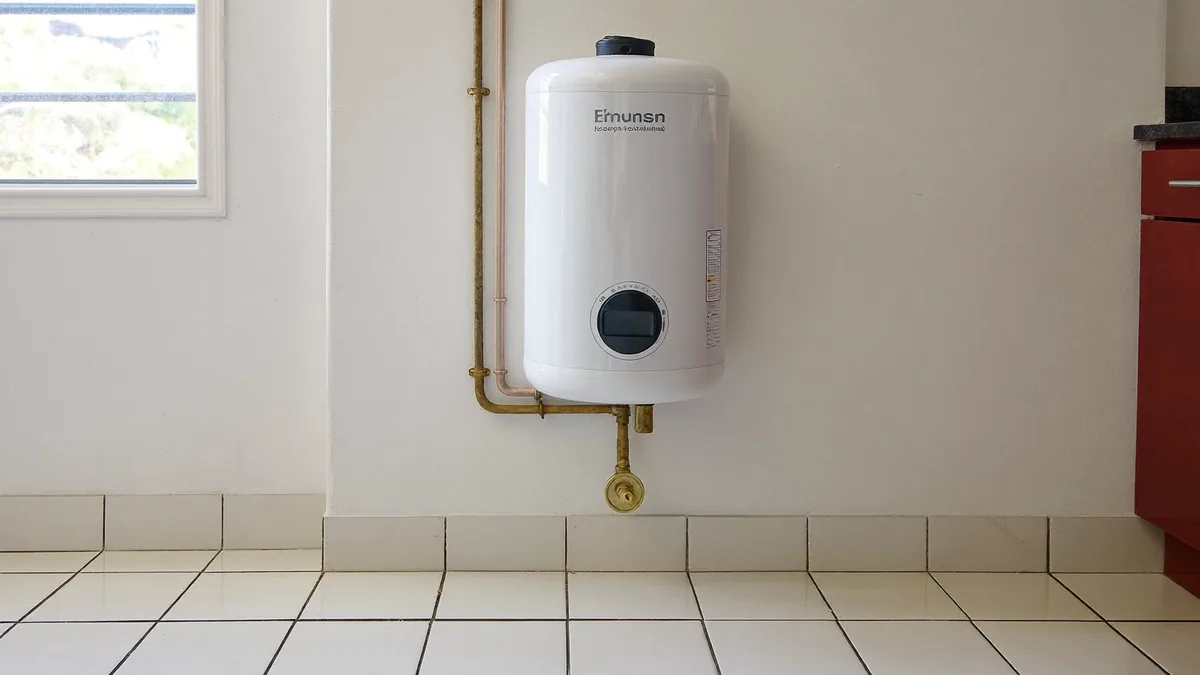
A tankless water heater cost covers the unit, the labor to install it, and any upgrades the house needs to run it, such as a larger gas line, new venting, or more electrical capacity. For most homes, installation work makes up a large share of the bill, so compare the full scope before you focus on the unit price.
What drives your tankless water heater cost
Five factors account for most of the difference between estimates. Understanding them helps you read quotes and ask better questions.
Gas or electric
Gas units need a burner, a vent, and a gas supply sized for their heat output. Electric units need no flue, but they draw a large current through a dedicated circuit. The fuel type decides which upgrades are likely, so it shapes the whole job.
Flow rate
A tankless unit is rated by its Maximum GPM, the most gallons per minute of hot water it can supply. According to the U.S. Department of Energy (DOE), federal maximum flow rates are 2.5 gallons per minute at 80 psi for showerheads and 2.2 gallons per minute at 60 psi for lavatory and kitchen faucets. Add up the fixtures your household runs at the same time. Two showers and a kitchen faucet together could call for up to 7.2 GPM at those maximums, which can push you toward a larger unit or a second one.
Cold winter water also reduces the flow a unit can deliver at your set temperature, so size the unit for your coldest months.
Venting
Gas tankless units need a vent that carries combustion gases outdoors. The route, length, and materials all affect labor and parts. A flue sized for an old tank may not suit a tankless unit, which can mean new venting through a wall or roof. Local rules set the details, so check with your local building department before work begins.
Gas line sizing
A gas tankless unit draws a lot of fuel in a short time. If the existing line was sized for a tank or a range, the installer may need to run larger pipe from the meter. The line should be sized against the unit's BTU input and the length of the run, not guessed from the old setup.
Electrical service capacity
Electric tankless units often need a dedicated high-amperage circuit. If the panel has no room for that breaker, or the service is undersized, the quote may include a panel or service upgrade. That line item can change the total noticeably, so ask whether the estimate includes it.
Safety first: If you smell gas, leave the home right away and call the gas utility or 911 from outside. Do not open gas fittings or electrical panels yourself. Before any electrical work, turn off the breaker and verify with a tester that the circuit is dead.
Why tankless water heater installation cost is often the bigger share
The unit is a factory-built appliance with a known set of parts. Installation carries the house-specific costs: pipe runs, vent routes, panel capacity, and permits. A like-for-like tank swap often reuses the existing gas connection, vent, and wiring, while a switch to tankless more often changes them. That is why the tankless water heater price on a quote is only part of the picture.
What an installation quote should cover
- The unit: fuel type, Maximum GPM, and UEF, written into the quote.
- Removal: disconnecting and removing the old tank, and whether haul-away is included.
- Water connections: isolation valves, a tempering valve if your local rules require one, and any new piping.
- Gas work: line sizing, new pipe or fittings, a shutoff valve, and a leak test.
- Venting: materials, termination location, and condensate drainage for condensing models.
- Electrical: circuit, breaker, wire, and any panel or service upgrade.
- Permits and inspection: permit fees, who pulls the permit, and who schedules the inspection.
Comparing written quotes line by line
Quotes only compare well when they describe the same scope. A lower total that leaves out venting or panel work can cost more once the job is finished. Use these steps when you collect estimates:
- Ask each installer to visit before quoting, so they can see the gas line, vent route, and electrical panel.
- Give every installer the same details: fuel type, number of bathrooms, and the fixtures you run together.
- Confirm each estimate lists the unit's Maximum GPM and UEF.
- Mark any scope missing from one quote, and ask for pricing on possible upgrades such as a panel upgrade or a longer gas line.
Lifetime cost compared with a storage tank
The purchase price is only the start. According to the DOE, most storage (tank) water heaters last 10 to 15 years, while tankless water heaters can last more than 20 years. A tank bought today will need at least one replacement within 20 years, so that second purchase belongs in the comparison.
| Factor | Storage tank | Tankless |
|---|---|---|
| Lifespan (DOE) | 10 to 15 years | More than 20 years |
| Sizing rating | First-Hour Rating | Maximum GPM |
| Efficiency rating | UEF | UEF |
| Usual install scope | Often reuses existing connections | Often adds gas, vent, or electrical work |
The First-Hour Rating estimates how much hot water a storage unit can supply in an hour starting fully heated. Maximum GPM is the most a tankless unit can supply per minute. These ratings do not compare directly, so match each one to your peak household use. The Uniform Energy Factor (UEF) measures overall efficiency, so compare UEF values on written specifications. Tankless units skip the standby heat loss of a stored tank, but your actual savings depend on how much hot water you use.
Running costs and what energy rates mean
According to the DOE, water heating is about 18% of a home's energy use. The U.S. Energy Information Administration (EIA) reports an average US residential electricity price of 18.19 cents per kWh for January to August 2026. It also reports an average residential natural gas price of $15.34 per thousand cubic feet in 2025, about $1.48 per therm. Use the rate on your own utility bill rather than these averages when you estimate running costs for a specific home.
Rebates and tax credits as of November 19, 2026
Federal incentives change. The status below was checked on official sources on November 19, 2026, so confirm each item on the official site before you sign a contract.
- 25C Energy Efficient Home Improvement Credit: up to $2,000 a year for heat pump water heaters, and up to $600 for qualifying gas, propane or oil water heaters. It applied only to property placed in service before December 31, 2025, so it does not apply to 2026 installations.
- 25D Residential Clean Energy Credit: 30%, including solar water heaters, but not available for property placed in service after December 31, 2025.
- DOE Home Electrification and Appliance Rebates (HEAR): run by states and available only in select states. Up to $1,750 for an ENERGY STAR heat pump water heater, for households with income below 150% of area median income.
Since DOE Program Notice 26-2 (effective May 29, 2026), HEAR rebates no longer cover replacing a gas (non-electric) appliance. Only electric-to-more-efficient-electric upgrades qualify. Availability depends on your state and utility, so check your state energy office and your utility for current programs.
Temperature and carbon monoxide safety
The DOE and the CPSC both recommend setting a water heater to 120°F, which the DOE describes as a temperature considered safe for most of the population. CPSC figures show third-degree burns can occur after about 2 seconds at 150°F, 6 seconds at 140°F, and 30 seconds at 130°F, and can occur after 5 minutes at 120°F. According to the DOE, people with a compromised immune system or chronic respiratory disease may want to keep the setting at 140°F.
Because gas units burn fuel, the CPSC recommends carbon monoxide alarms on every level of the home and outside sleeping areas. Test the alarms once the installation is complete.
Finding a qualified installer
Get at least two written quotes from installers who visited your home. Check the contractor's license with the state licensing board where licensing applies, and ask whether that license covers gas and electrical work. Ask whether permits are needed, who pulls them, and what the quote includes, such as haul-away of the old tank, code upgrades, and warranty registration. Compare the written scope first, not only the total.
Frequently asked questions
How much does a tankless water heater cost to install?
A single dollar figure would mislead you, because the total depends on fuel type, the flow rate you need, venting, gas line and electrical work, permits, and disposal. Compare written quotes that describe the same scope, and treat any missing line item as a question to ask before you choose.
Do federal tax credits still apply to a tankless water heater installed in 2026?
Based on official sources checked on November 19, 2026, the 25C credit applied only to property placed in service before December 31, 2025, so it does not cover 2026 installations. The 25D credit is not available for property placed in service after that date either. Confirm the current status on the IRS website before you buy.
Is a gas tankless unit cheaper to run than an electric one?
It depends on local fuel prices and how much hot water you use. The EIA reports an average residential electricity price of 18.19 cents per kWh for January to August 2026, and an average natural gas price of $15.34 per thousand cubic feet in 2025, about $1.48 per therm. Compare those rates with your own bill and the unit's UEF rating.
How long does a tankless water heater last compared with a tank?
According to the DOE, most storage (tank) water heaters last 10 to 15 years, while tankless water heaters can last more than 20 years. Actual life depends on water quality, maintenance, and how well the unit was installed, so ask your installer about upkeep before you sign.
Will a rebate cover a gas tankless installation?
Probably not if you are replacing a gas unit under the federal HEAR program. Since DOE Program Notice 26-2, effective May 29, 2026, HEAR rebates no longer cover replacing a gas (non-electric) appliance. The programs are run by states and available only in select states, so check your state energy office and utility for options that may apply to you.