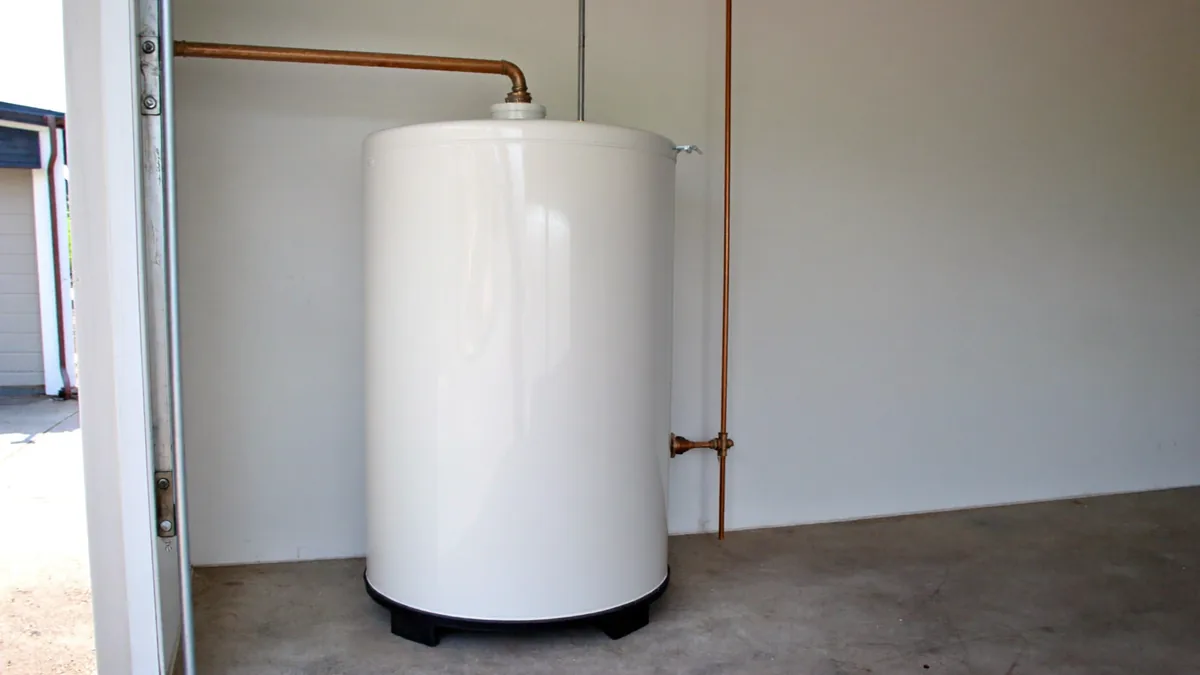
Your heat pump water heater cost is the total of the unit, installation labor, electrical and drain work, permits, and removing the old tank. Because those pieces vary from home to home, compare written quotes line by line. Federal tax credits no longer cover 2026 installations, but some state and utility rebates may still apply.
What makes up the heat pump water heater cost
Replacement quotes often bundle several separate items. Read each line so you can see what you are paying for and what is missing.
- The unit: the tank size and efficiency rating drive most of the equipment cost. Match the tank to your household's needs, not to the largest model you can find.
- Installation labor: removing the old tank, connecting water lines, setting the new unit level, and testing the system.
- Electrical work: a dedicated circuit, a new breaker, new wiring, or a panel upgrade if the panel lacks capacity.
- Drainage: a condensate drain line, pump, or pan, depending on where the unit sits.
- Permits and inspection: fees and who is responsible for pulling the permit.
- Extras: haul-away of the old unit, code upgrades, and warranty registration.
Two specifications on the unit's paperwork help you compare models. According to the federal test procedure (10 CFR 430, Appendix E), the First-Hour Rating estimates the maximum volume of hot water a storage water heater can supply within an hour when it starts fully heated. The Uniform Energy Factor (UEF) is the measure of a water heater's overall efficiency. Ask the installer to explain how both numbers were chosen for your household.
Space and airflow around the unit
A heat pump water heater pulls heat from the air around it and releases cooler air into the room. That means the location affects both performance and cost. A basement, utility room, or garage with open air usually works better than a tight closet with no air exchange.
Check the installation manual for required clearances, the minimum and maximum room temperatures, and any airflow requirements. If the best spot is far from your current plumbing or electrical panel, moving the unit can add pipe, wire, and labor. Choosing a location close to the existing connections is one of the most reliable ways to keep the total down.
Condensate drain requirements
While it runs, the unit removes moisture from the air and produces condensate, which must go somewhere. Common options include a floor drain, a condensate pump that lifts water to a drain, or a catch pan with a drain line. Each option has a different cost, and some locations need more than one.
Ask the installer whether your site needs a drain, pump, or pan, and whether the work is included in the quote. Local rules differ on how condensate may be discharged, so check with your local building department before the work starts.
Electrical circuit and panel capacity
Heat pump water heaters are electric appliances that need their own dedicated circuit. The unit's nameplate lists the electrical requirements, and an electrician compares those figures to your panel. If the panel is full or the existing circuit is undersized, the project may need a new breaker, heavier wire, or a panel upgrade, which can be the largest variable in the total.
Safety first: turn off the breaker for the existing water heater circuit, confirm the power is off with a voltage tester before touching any wiring, and leave panel work to a qualified electrician if you are unsure about any step.
Before you get quotes, look at the panel label and note whether there are open slots for a new breaker. Write down the unit's electrical specifications so every installer quotes the same job.
How operating savings are calculated
According to the U.S. Department of Energy (DOE), water heating is about 18% of a home's energy use. A heat pump water heater reduces that share by moving heat from the air into the water instead of making all of the heat directly. The savings logic is simple: compare the estimated yearly energy use of the old and new units, then multiply by your local energy price.
Current U.S. averages from the U.S. Energy Information Administration (EIA) help with the arithmetic. The average residential electricity price was 18.19 cents per kWh for January to August 2026, so 1,000 kWh costs about $181.90 at that average. The average residential natural gas price was $15.34 per thousand cubic feet in 2025, about $1.48 per therm, so 100 therms costs about $148. Your actual bill depends on your utility rate, so use your own bills in the comparison.
- Find the estimated annual energy use listed in the new unit's specifications.
- Multiply that kWh figure by your electricity rate from your bill.
- Compare that result with your current water heater's yearly cost, based on your gas or electric usage.
- If your utility has time-of-use rates, ask whether shifting hot water use to lower-rate hours fits your schedule.
Setting the thermostat matters as well. The DOE recommends 120°F as a temperature considered safe for most of the population. People with a compromised immune system or chronic respiratory disease may want to keep it at 140°F, so ask your doctor if that applies to your household.
Rebates and the status of federal incentives
Federal incentives have changed, and some programs no longer apply to new installations. As checked on official sources on November 19, 2026, the status is:
| Program | Figure | Status |
|---|---|---|
| 25C Energy Efficient Home Improvement Credit (IRS) | Up to $2,000 a year for heat pump water heaters; up to $600 for qualifying gas, propane, or oil water heaters | Applies only to property placed in service before December 31, 2025, so it does not apply to 2026 installations |
| 25D Residential Clean Energy Credit (30%, including solar water heaters) | 30% | Not available for property placed in service after December 31, 2025 |
| DOE Home Electrification and Appliance Rebates (HEAR), run by states | Up to $1,750 for an ENERGY STAR heat pump water heater, for households with income below 150% of area median income | Available only in select states. Since DOE Program Notice 26-2 (effective May 29, 2026), these rebates no longer cover replacing a gas (non-electric) appliance, only electric-to-more-efficient-electric upgrades |
Confirm current details on the official IRS and DOE websites, then check your state energy office and your utility for any programs open to you. Utility programs and state rules change, so confirm eligibility and deadlines before you buy.
How to compare written quotes
Get at least two written quotes for the same specified unit and the same scope of work. Ask each company to list the unit, labor, electrical work, drain work, permit, haul-away, and any code upgrades as separate lines. A quote that says only "complete installation" makes comparison difficult.
Before you sign, check the contractor's license with the state licensing board where licensing applies. Ask who pulls the permit and whether the inspection is included. Confirm whether the warranty registration is handled by the installer or left to you, and ask what the warranty covers. Also ask how the work will meet your local code, and check with your local building department on any requirements that apply to your address.
Practical ways to lower the total
- Choose a location near existing water and electrical connections.
- Ask whether your current circuit and panel can support the unit before you agree to a panel upgrade.
- Replace the unit on your own schedule rather than after a failure, so you have time to compare quotes and check rebates.
- Ask about bundling the drain, permit, and haul-away into one clear price rather than paying for add-ons later.
- Keep the tank temperature at the setting you have chosen and follow the manufacturer's maintenance schedule, which helps the unit run efficiently over time.
Storage tank water heaters commonly last 10 to 15 years, according to the DOE, so planning a replacement window can make the comparison easier.
Frequently asked questions
Can I still claim the federal tax credit on a heat pump water heater installed in 2026?
As checked on November 19, 2026, the 25C credit applied only to property placed in service before December 31, 2025, so it does not apply to 2026 installations. The 25D credit is also not available for property placed in service after December 31, 2025. Confirm these rules on the official IRS website before you make a purchase decision, and keep your records of the installation date.
Why does a heat pump water heater need a condensate drain?
The unit removes moisture from the air as it operates, and that moisture collects as condensate. It needs a route out, such as a floor drain, a pump, or a catch pan with a drain line. The right option depends on the installation site, so ask the installer to confirm the plan and include it in the quote.
Can I install a heat pump water heater in a closet?
It is possible in some closets, but the unit needs enough open air to operate well. Check the manufacturer's clearance and airflow requirements, and make sure the room will not get too cold for the unit. If the closet is tight, ask the installer whether the setup meets the manual and your local code.
How do I estimate yearly operating cost from my electric rate?
Start with the estimated annual energy use from the unit's specifications, measured in kWh. Multiply that number by your electricity rate from your bill. For example, at the EIA's January to August 2026 average of 18.19 cents per kWh, 1,000 kWh comes to about $181.90, but your utility's rate is what counts for your home.
Do rebates apply if I am replacing a gas water heater?
Under DOE Program Notice 26-2, effective May 29, 2026, the HEAR rebates no longer cover replacing a gas (non-electric) appliance. They apply only to electric-to-more-efficient-electric upgrades, and only in select states. Check your state energy office and your utility for current programs, since eligibility and funding can change.
What should I ask an installer before accepting a quote?
Ask who pulls the permit, whether the inspection is included, and whether the price covers haul-away and any code upgrades. Confirm the unit model, the warranty terms, and who registers the warranty. Written answers to these questions make it easier to compare two quotes fairly.