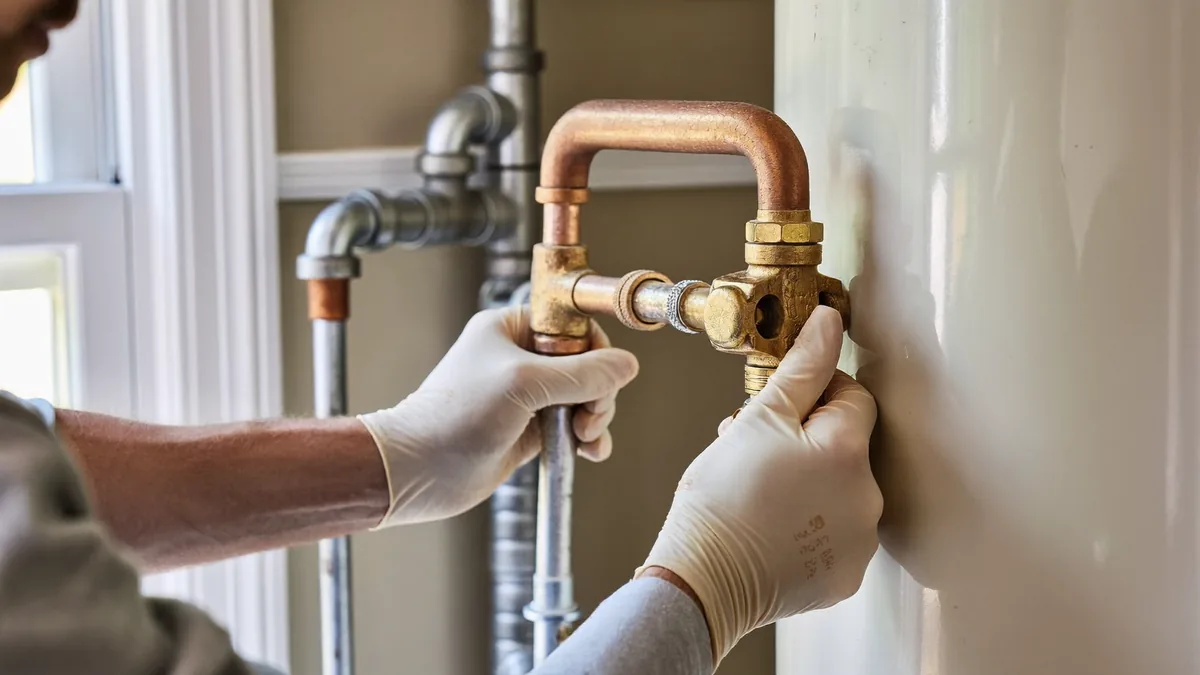
Do I need a permit to replace a water heater? In many places, yes. Many jurisdictions require a plumbing permit to install or replace a water heater, even when the new unit goes in the same spot. Rules differ by state and city, so your local building department has the final word on whether a permit applies and what the inspector will check.
Do I need a permit to replace a water heater in your area?
A water heater involves more than swapping one tank for another. The job usually touches the water supply, the drain and relief piping, and often a gas line or electrical circuit. Because those connections affect safety, many cities and counties treat replacement as permitted work, not routine maintenance.
As an example of this pattern, the City of San Diego states that a plumbing permit is required for the installation of a water heater, including replacements. Other cities and counties publish their own lists, so use San Diego as an illustration of how the rule often works, not as a ruling for your address.
Why most jurisdictions require a water heater permit
A permit puts the work on record and brings in an inspection before the work is covered up. Water heaters hold water under pressure at high temperature, so a fault in piping, venting or a safety valve can lead to flooding, scalding or fire. An inspector can catch these problems while the connections are still exposed.
The permit also creates a record. When you sell the home, a buyer or inspector can see that the replacement was reviewed, rather than wondering who did the work and whether it met the water heater installation code in place at the time.
Who pulls the permit
Who can pull the permit depends on where you live. In some places a homeowner may apply for a permit to do work on their own home. In others, the permit must be pulled by a licensed contractor. Ask the building department directly rather than assuming either answer.
If you hire a pro, ask whether the permit will be in your name or theirs. The person who pulls the permit is usually the one who answers to the inspector if the inspection fails, so settle this before work starts and put the answer in writing.
What the inspector checks
Inspection details vary by jurisdiction, but several items come up often in water heater work. Most of them trace back to rules in the model codes that many local jurisdictions adopt, with amendments.
The temperature and pressure relief valve discharge pipe
The International Plumbing Code (section 504.6) and the International Residential Code (section P2804.6.1), 2021 editions as summarized by the International Code Council, set the rules for the discharge pipe. The pipe must:
- Not connect directly to the drainage system
- End in an air gap in the same room
- Be no smaller than the valve outlet
- Not be trapped, and drain by gravity
- End no more than 6 inches above the floor or a waste receptor
- Have no threaded end, and no valves or tees
- Be rated for 100 psi at 180°F
The relief valve must never be capped or plugged. A blocked valve cannot release pressure when the tank needs it to, so inspectors look at the valve and the pipe closely.
Gas connections, venting and the unit label
For gas units, inspectors typically look at the gas connection, the venting and the combustion air supply. Check the unit's label as well. According to the CPSC, gas water heaters made after July 1, 2003 with flammable vapor ignition resistant (FVIR) design resist igniting flammable vapors. An older unit may need a closer look during the replacement, and your building department can tell you what it expects.
Garage installations
If the new heater will sit in a garage, the International Residential Code (P2801.7 and M1307.3) requires the ignition source of appliances in garages to be at least 18 inches above the floor, as cited by the North Carolina State Fire Marshal. Some states allow exceptions. North Carolina has exempted electric water heaters since 2024, so confirm with your building department whether a similar exception applies where you live.
Seismic strapping in California
In California, Health and Safety Code section 19211 requires water heaters to be anchored or strapped so they resist falling or moving in an earthquake. Sellers must also certify to buyers that the water heater is braced, according to Cal OES. An inspector may check the straps as part of the permit.
Safety first
Safety first: If you smell gas at any point during the job, leave the home right away and call the gas utility or 911 from outside. Do not operate switches, phones or appliances inside while you smell gas. The CPSC recommends carbon monoxide alarms on every level of the home and outside sleeping areas, so check that yours are working before and after the replacement.
How to check with your local building department
A short phone call or visit to the building department will answer most of your questions. Use the steps below and note the name of the person you spoke with and the date.
- Find the building or permit office for your address. If you live outside city limits, it is usually run by the county.
- Ask whether a plumbing permit is required to replace a water heater, even in the same location.
- Ask whether the gas or electrical work needs its own permit.
- Ask who may pull the permit: the homeowner, a licensed contractor, or either.
- Ask which inspections are required and when each one must happen, including whether the inspector needs to see the unit before the connections are covered.
- Ask about local rules for garage placement, seismic strapping and relief valve piping.
- Ask whether the permit or any inspection record can be checked online or requested later for a home sale.
Timing a planned replacement
According to the U.S. Department of Energy, most storage (tank) water heaters last 10 to 15 years, while tankless water heaters can last more than 20 years. If your unit is nearing the end of its typical life, a planned replacement lets you apply for the permit and schedule the inspection on your own timeline.
Replacing during an emergency, such as a leak or no hot water, leaves less room to compare options. Starting the permit question early gives you time to confirm requirements, get quotes and plan the inspection around your schedule.
Finding a qualified installer
Get at least two written quotes and compare what each one covers. Check the contractor's license with the state licensing board where licensing applies. Ask whether the quote includes pulling the permit and who will pull it, whether haul-away of the old unit is included, whether any code upgrades such as relief valve piping or garage clearance are priced in, and whether warranty registration is handled for you.
Frequently asked questions
Can I replace a water heater myself without a permit?
It depends on your jurisdiction. Many places require a plumbing permit for a replacement, and some allow a homeowner to pull one for their own home. Skipping the permit where one is required can leave the work unrecorded, which may cause problems when you sell the home. Ask your local building department before you start.
Does a like-for-like replacement still need a permit?
Often, yes. Many jurisdictions treat replacing a water heater in the same spot as installation work that needs a plumbing permit. The City of San Diego, for example, states that a plumbing permit is required for the installation of a water heater, including replacements. Confirm the rule for your own address with the building department.
What does the inspector check on the relief valve?
The inspector checks that the discharge pipe follows the rules in the International Plumbing Code and International Residential Code. That includes an air gap in the same room, no direct connection to the drain, no trap, gravity drainage, an end no more than 6 inches above the floor or a waste receptor, and no valves or tees. The valve must never be capped or plugged.
Do I need a permit for a tankless water heater?
Many jurisdictions require a permit for tankless installations as well, because they involve water, venting and often gas connections. Ask whether the gas, venting and plumbing work each need separate permits. The building department can also tell you which inspections apply to your type of unit.
Who is responsible if the inspection fails?
Responsibility usually follows the permit. If you pulled the permit, you are typically the person the inspector contacts about corrections. If a contractor pulled it, that contractor generally handles the correction. Confirm this in writing before the work begins, so there is no confusion about who fixes what and who schedules the reinspection.